I participated in the Samurai Game workshop Paul facilitated and I highly recommend it. I found it to be an exceptional opportunity to learn more about who you are as a person and how you behave/respond to different situations and events that you have no control over. You think you know how you will behave/respond, […]
self portrait – pencil and self-deception, 2015
November 16, 2015
I have always struggled to draw faces. And there is one I find particularly challenging.
Mine.
 Drawing someone else’s face is difficult but it isn’t challenging. They look how they look and when I do try to draw them it doesn’t worry me that much that my attempts to capture a likeness on paper falls well short.
We are very comfortable looking at someone else and drawing our own conclusions about what motivates them, their values, how they show up in the world, whether they have two faces or just one. Sure it can be difficult and sometimes we get it wrong but that doesn’t really matter, the picture we create of them will do for today.
Drawing a self-portrait however, requires that I actually spend some time looking at my own face – the one I have spent more time with than any other but have spent the least amount of time observing. It doesn’t look like I imagine it to look (or how I want it to look if the truth be told). My forehead seems too big – even when it sits between the enormity of my ears.
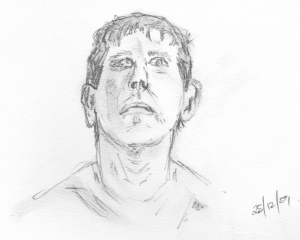 Sitting in front of the mirror with pencil in hand I have to continually remind myself to draw what I see, not what I wished I saw. Looking at the page and not the mirror, I have to fight the urge to add lines, to make things smaller or bigger, to simplify or change the relationship between parts of me that cannot be changed. There is nowhere to hide – I am as I appear to be.
Even harder still is sitting down in front of a different kind of mirror, the mirror provided by the people we live with, the people we work with. Seeing ourselves reflected through their eyes we start to notice that we don’t look to them like we imagine we do (or how we want to look if the truth be told).
And here too we need to remind ourselves to create the picture from what they show us, not what we want to see. It is difficult to resist the urge to add a more truthful mouth or make our ego bigger or smaller than it actually is, to simplify or change the relationship between them and us.
We need the courage to create a picture of what is and to put down on paper what they say they see, even though there are many things about ourselves that we might want to change, and could change, but haven’t.
Once you are able to do that the real work can begin.
***
If you would like me to come and share with you and your team the benefits that come from my work in the theatre and the experiential learning environments that I create, make me an offer via the Contact Me page.
Here is what some participants have said about their experience with me:
The Samurai Game was a 1-day workshop (open to the public) that I attended (upon recommendation) in February 2015. The game was delivered in a safe workshop setting – and Paul’s facilitation allowed attendees to learn the rules and values of a 16th century Japanese Samurai warrior. Attending the Samurai game workshop gave me the […]
For more on the Samurai Game you should start here and here.
If you enjoyed reading this or my other posts and you would like to read more, you can subscribe and receive them via email simply by putting your email address into the Email Subscription box just on the right of my blog home page. You will receive a confirmation email (which some systems will think is spam so keep an eye on your junk mail) that you need to acknowledge to complete the subscription process.
After you have subscribed, send this post on to your friends. Go on. You know at least one person who should read this post and three more who could use a bit of shaking up… seriously. Do it now. You read this far so send it on! I promise they won’t judge you or think less of you if you do.
We all do it. I know you do. You sit at a coffee shop or at a restaurant or on a bus (anywhere really that you can sit and watch people talk) and you listen in to conversations that other people are having. You can’t turn to see their faces so you just sit and watch other people while you listen. Sometimes the conversations are nothing special but sometimes they can be extraordinary.
It is in that spirit that I present Sitting Watching People Talking – an occasional series in which I hope to share the best parts of the interesting conversations you always have (or hear) while you are sitting watching people talking. Unscripted and unrehearsed, this episode starts with a friend and a spider in the shower and ends reflecting on fundamental human tendencies stopping at gender equality and religious fundamentalism along the way. All in under 5 minutes!! Take a listen (watch if you want) and leave me a comment to let me know what you think of the concept, whether you prefer the written blogs, how it could be improved – that sort of thing.
Sitting Watching People Talking – Pilot Episode 1 :
Incy-wincy spider, religious fundamentalism, gender equality and the Ballard of Ricky Bobby
***
If you would like me to come and share with you and your team the benefits that come from my work in the theatre and the experiential learning environments that I create, make me an offer via the Contact Me page.
Here is what some participants have said about their experience with me:
I have just been reflecting on the amazing success of our Year 6 and 7 Leadership retreats this year. Finding a way to engage and motivate students for two days about the qualities of leadership in a practical way is no mean feat. Keeping 60 boys engaged for that period of time is even more […]
The Samurai Game for me was a reminder. We are used these days to second chances, with our kids, gaming and usually at work. The game reminded me to be in the moment, not expecting a second chance. Personally, I’ll bring myself to the moment, by being there with, and for, my immediate family, wider […]
For more on the Samurai Game you should start here and here.
If you enjoyed reading this or my other posts and you would like to read more, you can subscribe and receive them via email simply by putting your email address into the Email Subscription box just on the right of my blog home page. You will receive a confirmation email (which some systems will think is spam so keep an eye on your junk mail) that you need to acknowledge to complete the subscription process.
After you have subscribed, send this post on to your friends. Go on. You know at least one person who should read this post and three more who could use a bit of shaking up… seriously. Do it now. You read this far so send it on! I promise they won’t judge you or think less of you if you do.
working in three dimensions
October 26, 2015
A guest post from rhxthinking:
My girlfriend’s a viticulturist. Her work product is grapes and wine. I’m a knowledge worker – what I produce is less tangible: content and process (messages, documents and conversations). So when I have a hankering to make something ‘real’, I turn to origami (Japanese craft; literally, ‘to fold paper’). It’s a pastime I picked up while living in Japan.
You might be tempted to think of paper-folding as simply a hobby (to do while drinking my girlfriend’s great wine), but working with coloured squares of paper can have quite an impact on how you think and behave. To my surprise, I’ve found a place for it in my work practice.
Unfold your potential
Origami is not just for children or playing. Scientists and researchers are taking it seriously.
‘Diversifying experiences enhances cognitive flexibility’ argue researchers in the Journal of Experimental Social Psychology. So why not fold paper in strange and beautiful ways, to expand your usual thought patterns?
 A recent article in Business Week explains: ‘Flowers, leaves, wings, proteins, mountain ranges, eyelids, ears, DNA—all are created by folding. Today researchers in robotics, biology, math, and computer science are immersing themselves in [folding] methods. Scientists are looking at how materials and molecules wrinkle, drape, flex, and crease. They’re using folding to design everything from robots to cancer drugs, from airbags to mirrors for satellite telescopes.’
This is a great example of using an art form in a surprising way. Like Jeff Jarvis’s definition of serendipity: it’s unexpected relevance!
Origami and my work
So how does paper-folding bring a new dimension to life at the office? My job is facilitating change and learning, particularly in knowledge and other organisational initiatives. I’ve discovered that origami has a place beyond my leisure time, and that there are workplace benefits from this offbeat form of paper trail:
- Play – you have fun, experiment, create at your desk. It takes only a short time to produce a new piece. You use your hands in a tactile way and develop your hand–eye co-ordination, which is a welcome break from tapping the keyboard and digital work. Play is big as a workplace activity, as is gamification.
- Relationships – you can make friends, build rapport and trust. It’s non-threatening. You can try it one-to-one or in a group. Anyone can do it – it cuts through boundaries. (Side thought: Origami as offline social medium?)
- Object lesson – you learn something new, and collaborate. It’s also about creativity, about choices and detail.
Here’s an example. Before a workshop with dense technical content, we used origami as a fun starter. The aim was to make a set of building blocks, each one folded by an individual and then assembled into a single object. All the pieces had to be right, for the assembly to work. Some people saw the paper and instructions on the table and started without waiting for the demonstration. Others ignored the verbal instructions and raced ahead, failing to fully comprehend what was required. Both approaches hindered successful collaboration, as they resulted in pieces that wouldn’t fit in.
During a business coaching session with an entrepreneur who was overwhelmed by work and needed to step back for a short break, we did origami together. He felt as if he was being productive and learning something new, all the while having guilt-free time playing.
A useful model
 I taught a colleague how to do origami during lunch breaks. She enjoyed it, and she can see links between the creative process and her work. In her own words:
‘I was asked to talk about how I build an academic timetable. I quickly found a connection to origami. Just like the timetable, origami starts with something small that one can’t immediately see as part of a larger entity. I was able to relate different elements of origami (e.g. coloured paper, pattern to follow, building blocks, etc) to timetable concepts. It was the right approach – not everybody knew timetable terminology but they were successful in understanding the process.’
Ending on a happy note
At the end of a consulting session, I’ve produced a folded creation to show my gratitude or simply lighten the mood. I invite the client to choose a piece of paper, and I make a paper swan, a butterfly or a flower as they watch. The unexpected fun and the gesture of a handmade gift enhances our rapport and generates goodwill.
Ready to fold?
For origami paper and instructions in English, I recommend the online store: www.origami.com.au
For inspiration, see some of the creations in my Facebook photo album.
Helen Palmer is Principal Consultant at RHX Group. She thinks critically about knowledge work, and how to ensure knowledge isn’t wasted. She revels in tackling the big processes of change and learning, so that ideas become impact. With her colleagues at RHX Group, Helen helps teams make better use of their people, knowledge and information.
how Disney’s Frozen can help avoid a zombie apocalypse
October 19, 2015
An easy DIY monkey trap.
Materials :
- A coconut.
- A rope.
- Something that a monkey thinks they want.
Assembly Instructions:
- Attach the coconut to one end of the rope
- Secure the other end of the rope to a tree (tree not included).
- Make a hole in the coconut that is just large enough for a monkey to get their hand inside.
- Place into the coconut what the monkey thinks they want.
- Wait.
How does it work?
When the monkey grabs what is inside the coconut it makes a fist that is bigger than the hole. That’s it. Simple huh?
Enter the hunter … which is the end of the story and the end of the monkey whose brain ends up as someone’s dinner. All the monkey had to do to get free is to let go of whatever it thinks it wants. It doesn’t and so is trapped by its own desire.
Poor monkey. A couple of million more years of evolution is all they need to figure it out. We would never get caught like that…

“Let it go!” (via http://kids.tribute.ca/downloads/)
But we are and we are caught in a much more subtle trap. We have formed our fist by wrapping our hand tightly around a past that no longer exists.
I think that much of the developed world is trapped in this way – unable to move because it is holding on tightly to how things were, refusing to let go and refusing to admit that it is the longing for the past that is preventing any movement into the future.
Worse still, the vast majority of us are not prepared to admit that we have been imprisoned by our own minds.
We continue to argue that the world still is as it was, that our climate is not changing, that continuous year on year economic growth is both possible and good, that the relationship is salvageable, that the planet and its systems can absorb the wastes and toxins we dump into it each day without any long-term harm.
Continuing to deny the existence of change means we still have something to hold on to, and that can be comforting. It absolves us of the responsibility “Can’t you see that I would like to move, to change, but this thing, this set of circumstances has me trapped here!” It allows us to make the trap responsible – we can point to it and say “if only…“, “it’s not fair…“.
We are afraid because if we admit that what we are clinging to no longer exists we will be left with nothing to hold on to.
We are certain about what the past held for us. We know how things were, we know what we had, we are certain we know who we were. The future is much less certain and probably not as pleasant. Higher unemployment, lower real wages and a lower standard of living are just a few of the things that might meet us there.
It is no surprise we hold so tightly to what we think we had. Letting go requires us to accept that we cannot know what the future holds for us, that we don’t know how things will be, what we will have or, most unsettling of all, who we will become.
If we don’t want our fears to control our future, to serve up our brains in some zombie apocalypse of our own creation, we need to take advice from Disney’s Elsa and “let it go”. As soon as we do we can remove our hand from the coconut and move into a different and hopefully better future.
One in which we get not only to keep our brains, but to keep using them!
***
If you would like me to come and share with you and your team the benefits that come from my work in the theatre and the experiential learning environments that I create, make me an offer via the Contact Me page.
Here is what some participants have said about their experience with me:
After reading the testimonials about the Samurai Game, I hadn’t fully understood what they meant about how it could be a challenging experience (even confronting) yet it was held in a safe and supportive environment. Having done it I can confirm it is all of that and more. What I particularly liked was the way […]
The Samurai Game was a 1-day workshop (open to the public) that I attended (upon recommendation) in February 2015. The game was delivered in a safe workshop setting – and Paul’s facilitation allowed attendees to learn the rules and values of a 16th century Japanese Samurai warrior. Attending the Samurai game workshop gave me the […]
For more on the Samurai Game you should start here and here.
If you enjoyed reading this or my other posts and you would like to read more, you can subscribe and receive them via email simply by putting your email address into the Email Subscription box just on the right of my blog home page. You will receive a confirmation email (which some systems will think is spam so keep an eye on your junk mail) that you need to acknowledge to complete the subscription process.
After you have subscribed, send this post on to your friends. Go on. You know at least one person who should read this post and three more who could use a bit of shaking up… seriously. Do it now. You read this far so send it on! I promise they won’t judge you or think less of you if you do.
what every leader needs – a mirror that can look at you
October 12, 2015
I am not blind but there is one thing I know that I will never see.
This past weekend I again had the privilege to serve sixteen outstanding individuals by facilitating George Leonard’s Samurai Game for them. In our discussions towards the end of the day a theme emerged that was centered around the differences that arose between how we think we show up as leaders and how others experience our leadership efforts.
You might not be blind, but there is one thing I can see that I know you never will.
The day after the Samurai Game I was working with my trainer, the wonderful Tony Lewis on improving my flexibility in my thighs/hips/ lower back/ spine/ shoulder blades. (I list them all because Tony’s experience as Principal Dancer with the Queensland Ballet forms the foundation for his understanding of the importance of working with the whole person not just their individual muscles). I had watched him demonstrate and was doing my best to emulate the new form, checking in the mirrors to try to match what I was doing to what I had seen him do.
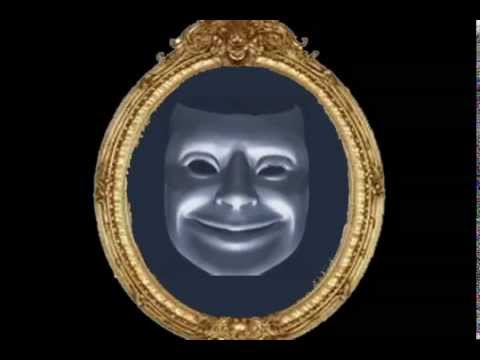
It is what they say that is magic.
A mirror doesn’t help me see what I can never see because the person doing the looking is me.
The Samurai Game provides a challenging environment for leaders. Selecting people in your team to undertake tasks based on their skills and abilities is difficult, particularly if you have only just met them that day. It makes the decision even harder when you know, within the metaphor of the game, that they are going into battle and they may not return. Meeting budget or production targets is one thing, but it is hard to think that you are doing a good job leading when you look around and see that half of your team is no longer there.
What we see is rarely the same as what is.
Tony said the new exercise should provide a more dynamic stretch to my hamstrings. I was feeling it in my back and I said so. He looked at me again and suggested some adjustments in the positions of my hands and feet and suggested instead of pushing against I lead with a movement towards. Sure enough my hamstrings started singing and my back was silent.
Looking in a mirror shows us only what we expect to see or what we fear others will see.
The young woman from the Samurai Game said that she thought she had been a terrible leader because her team had lost battle after battle while she had led. A chorus of voices rose in disagreement. She had been thrust into leadership unexpectedly, had made a number of decisions in particularly difficult circumstances and exhibited a strength of character and maturity that had impressed those many years her senior. I think it was hard for her to listen to them at first but as each new member of her team spoke of what they saw as her strength in leadership, she was able to start to see it herself.
The only way I can ever know how I look to you … is if you tell me.
When you are trying to teach me new things the only way you can know I have listened well is if I tell you how it now looks for me. It requires us to have the courage to speak those words clearly and the humility to hear them well.
If you can find someone who can act as a mirror for you and tell you what they can see it will make all the difference to your leadership and your life. Don’t worry, they are not as rare as the fairy tales would have you believe.
***
If you would like me to come and share with you and your team the benefits that come from my work in the theatre and the experiential learning environments that I create, make me an offer via the Contact Me page.
Here is what some participants have said about their experience with me:
Leaders of today and tomorrow need to understand the meaning of trust. They must then demonstrate it in their behaviour. This participatory personal learning experience stands alone in developing these traits. The Samurai Game helps aspiring leaders to identify and reinforce their code of honour and ethics, their Bushido. Paul Marshall’s brilliance guides you across […]
As a participant in my first ever Samurai Game I can now understand why the world has embraced this experience to take people out of their comfort zones and enable them to explore their own everyday existence, values and morals. I would recommend this to any leadership team or business unit wanting to unlock that […]
For more on the Samurai Game you should start here and here.
If you enjoyed reading this or my other posts and you would like to read more, you can subscribe and receive them via email simply by putting your email address into the Email Subscription box just on the right of my blog home page. You will receive a confirmation email (which some systems will think is spam so keep an eye on your junk mail) that you need to acknowledge to complete the subscription process.
After you have subscribed, send this post on to your friends. Go on. You know at least one person who should read this post and three more who could use a bit of shaking up… seriously. Do it now. You read this far so send it on! I promise they won’t judge you or think less of you if you do.
new beginnings, new beginners
September 25, 2015
Change can be confronting at the best of times. But when you are tired and sore and your current circumstances aren’t projected to changes for many, many years it can seem more than overwhelming.
My parents welcomed their first grandson into the world this week. The first-born of one of my sisters, it is quite a change for them after the long line of grand-daughters they have already been blessed with. Quite a change for my sister and her husband too.
When you think about it, change is often the first word that springs to mind when children enter anyone’s life. While my first thought is “I am so glad I don’t have to change dirty nappies any more…” adding a child into your life brings change well beyond nappies.
My first child introduced me to a previously un-imagined range of skills and abilities where, from the moment she entered our world, she made me feel distinctly “not yet competent”. When you have spent years developing an identity as someone who is competent at many, many other things that can be challenging to say the least.
You don’t know what to do, but then you can’t know because you have never done it before, and the tighter you hold on to the fiction that you are the one who does know, the one who is in charge … well, the less you are.
My eldest very generously taught us that lesson in her first day with us. Just six hours after she was born we left the hospital – she slept peacefully in the safety capsule as we drove home. She must have like that capsule a lot (though how she could get so attached after such a short time I do not know) because as soon as we took her out of it the screaming started. And she would not stop.
Feeding didn’t work. Walking, rocking, sitting, singing, humming, more walking, more feeding … nothing that we thought should work did. Never having done this sort of thing before we didn’t know what to do. It was terrifying to think of the future if our first hours together were starting out like this.
So we called a time out. We put her in the center of our double bed where we thought she could continue to scream but at least she would be safe. We took a step back and gazed in terrified awe and wonder at the red-faced, clenched fists gift we had been given and considered calling our parents (it was nearly midnight) and admitting we needed help.
And that was when she stopped screaming and fell fast asleep.
A little later on we crept onto the bed, one of us on either side of her, and watched as our daughter slept knowing, I suspect, that we all had learned an important lesson. The three of us had never done anything like this together before. It was her first time being our daughter and our first time being her parents. It was a new beginning and she had forcefully reminded us that we were all beginners. She had persisted with her screams until we allowed ourselves to admit that we did not know and that we could be ok with not knowing. We could learn our way into a future together.
And that theme continues till this day. Just last week I reminded her that she is the first teenage daughter we have ever had in our lives and that we are kinda making it up as we go along (cue withering teenage glare). We get most things right and some things wrong and we try to admit it when we do the later and not crow too much when we do the former. For her part, she is doing a wonderful job in her role as a teenage daughter (too good a job sometimes!) and she continues to give us opportunities to be beginners almost every day.
So, if I had to offer some advice to my sister or to anyone who is confronted by changes occurring in their life at the moment it would be this – do the best you can (it is enough), don’t worry that you don’t have all the answers (you don’t and you never will), try to remember that you are all beginners, let go of the idea that you are in charge (you aren’t and you never were) and most importantly of all take some time outs to step back and take a breath and marvel at the wonder of it all. Love you Bubs.
***
If you would like me to come and share with you and your team the benefits that come from my work in the theatre and the experiential learning environments that I create, make me an offer via the Contact Me page.
Here is what some participants have said about their experience with me:
Leaders of today and tomorrow need to understand the meaning of trust. They must then demonstrate it in their behaviour. This participatory personal learning experience stands alone in developing these traits. The Samurai Game helps aspiring leaders to identify and reinforce their code of honour and ethics, their Bushido. Paul Marshall’s brilliance guides you across […]
I have just been reflecting on the amazing success of our Year 6 and 7 Leadership retreats this year. Finding a way to engage and motivate students for two days about the qualities of leadership in a practical way is no mean feat. Keeping 60 boys engaged for that period of time is even more […]
If you enjoyed reading this or my other posts and you would like to read more, you can subscribe and receive them via email simply by putting your email address into the Email Subscription box just on the right of my blog home page. You will receive a confirmation email (which some systems will think is spam so keep an eye on your junk mail) that you need to acknowledge to complete the subscription process.
After you have subscribed, send this post on to your friends. Go on. You know at least one person who should read this post and three more who could use a bit of shaking up… seriously. Do it now. You read this far so send it on! I promise they won’t judge you or think less of you if you do.
change, like winter, must come slowly
September 15, 2015
Every minute of every day we seek out patterns and we scour our environment looking for changes in those patterns. We are pattern recognition machines.
There are systems in our body that are keeping us alive by making sure that very little changes. When things do change those systems make sure that we know about it. Systems monitor your internal body temperature and respond to make sure it stays within acceptable bounds regardless of the outside temperature.

Image Source: Huffington Post
Golgi tendon organs in your muscles can scream when you try to stretch a muscle beyond what it is used to – so much so we can feel afraid the muscle might break. Eat more than you usually do and you will receive signals of discomfort from your stomach. Walk, run or ride more than normal and you will be getting feedback for days about just how objectionable that sort of change in habit is to your body.
We are hardwired to find change distressing!
The process that seeks to manage that change is known as homeostasis. The tendency of the body to seek and maintain a condition of balance or equilibrium within its internal environment, even when faced with external changes.
For many things (like our body temperature) that is a good thing. For other things (like our weight or our cardiovascular health) it can be not so good, particularly when our condition of “balance” is one that lacks regular exercise and proper nutrition. It is twice as bad when eating less than you usually do is just as likely to send signals of discomfort as eating more!
And it doesn’t only happen on a physical level. Our affect system is driven by changes in the environment around us and its job is to make us aware of those change that are important to us.
A gun shot is an easy example of a rapid change in the external environment. Relative quiet is punctuated by a brief but large change in sound levels that draws our attention away from everything else and spins our head towards the sound in a standard “startled” response. That is our affect system doing its job.
When things happen a little more slowly, perhaps when we are riding on a roller-coaster or we see a tree falling towards us, then our affect system triggers a fear response in us so we can take action to protect ourselves.
A new boss at work that we don’t yet get along with, the knowledge that a critical project deadline is going to be missed are examples of lower levels of change that take place over a longer period of time that can result in us feeling distressed. Our affect system at work again.
Any change in the patterns of our life that we have come to think of as normal or being in balance will activate our affect system and generate an emotional response. It is a wonder that we change at all with a range of our own systems making change so uncomfortable for us.
There is hope though if we work with these systems and not against them. Like the proverbial boiled frog, to avoid activating the pain and distress the change, like winter, must come slowly.
The key to achieving significant and long-lasting change is then to make sure that you make those small changes on a regular basis.
Eat a carrot stick before you eat anything sweet. Instead of calling your colleague, walk to their desk. Plan to make a plan to achieve a goal that seems huge and insurmountable and then take the first small step in the plan… and then the next. Meditate for 1 minute each day. Read two pages of that book you have been meaning to read.
The only big change might be that you notice how much better you feel and how much more you seem to get done. And there is nothing distressing about that!
***
If you would like me to come and share with you and your team the benefits that come from my work in the theatre and the experiential learning environments that I create, make me an offer via the Contact Me page.
If you enjoyed reading this or my other posts and you would like to read more, you can subscribe and receive them via email simply by putting your email address into the Email Subscription box just on the right of my blog home page. You will receive a confirmation email (which some systems will think is spam so keep an eye on your junk mail) that you need to acknowledge to complete the subscription process.
After you have subscribed, send this post on to your friends. Go on. You know at least one person who should read this post and three more who could use a bit of shaking up… seriously. Do it now. You read this far so send it on! I promise they won’t judge you or think less of you if you do.
who is your to do list actually for?
September 7, 2015
I am guessing that you have one. A personal “to do” list of things that you want to get done. If you are like me it can get pretty long and some items have a tendency to drop towards, or even off, the bottom.
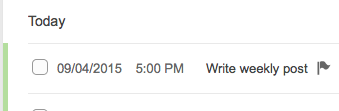 At work things move down your list because changes in business conditions have caused a reevaluation of priorities. For many of us, it is our manager who makes that call. After all, they know why we are doing it and they asked us to do the work in the first place. They are the customer for the work we do each day and they are responsible for holding us accountable.
But who is the customer for the work you have on your personal to do list? Who asked you to do that work in the first place? Why did you agree to do it and who is holding you accountable?
You are. You did. Only you know and you are responsible.
And that, I think, is where the problems start. And they will continue unless you are able to answer these four questions:
- Are you clear about why that item made it to your to-do list in the first place? You need to start with why (Simon Sinek can help there).
- Do you have a clear understanding about what specific actions the task involves (run 3.5 km and do 50 sit-ups) or have you just written something broad and vague like “get fit”?
- Have you committed to a clear date and time by which you intend to complete each task? Is it in your calendar complete with reminders?
- Are you able to articulate what standard of work is acceptable? The draft blog post I am currently looking at does not meet the standard attached to my task for today of “Write weekly post” so, much as I might want to, I will not be crossing that item off my list until I have actually hit the publish button.
Even if you have clear answers to all of those question circumstances might change. New priorities might emerge and the date for delivery on something else can slip or you might only have time to complete a 2 km run today. You know why you are running and the important piece may be getting into the habit of running not the distance.
All of that isn’t that hard.
The bigger question is how will you go about holding yourself accountable? Who is responsible for noticing the task has been rescheduled three times and asking you to explain? Who has the role of pointing out that there are no tasks on your list that are helping you get to your why and then asking why?
I have been thinking about that a lot lately and I think I have some answers, but I would love to hear how you do it. How do you go about holding yourself accountable? Please let me know by leaving a comment below.
***
If you would like me to come and share with you and your team the benefits that come from my work in the theatre and the experiential learning environments that I create, make me an offer via the Contact Me page.
If you enjoyed reading this or my other posts and you would like to read more, you can subscribe and receive them via email simply by putting your email address into the Email Subscription box just on the right of my blog home page. You will receive a confirmation email (which some systems will think is spam so keep an eye on your junk mail) that you need to acknowledge to complete the subscription process.
After you have subscribed, send this post on to your friends. Go on. You know at least one person who should read this post and three more who could use a bit of shaking up… seriously. Do it now. You read this far so send it on! I promise they won’t judge you or think less of you if you do.
Why does change in organisations cause so much unnecessary suffering? We accept that some short-term pain may be a consequence of change but who signs up for the suffering?
Listening to a lecture by Tara Brach recently I was struck by how apt the Buddhist metaphor for suffering is for organisations and how the people in them respond to change.
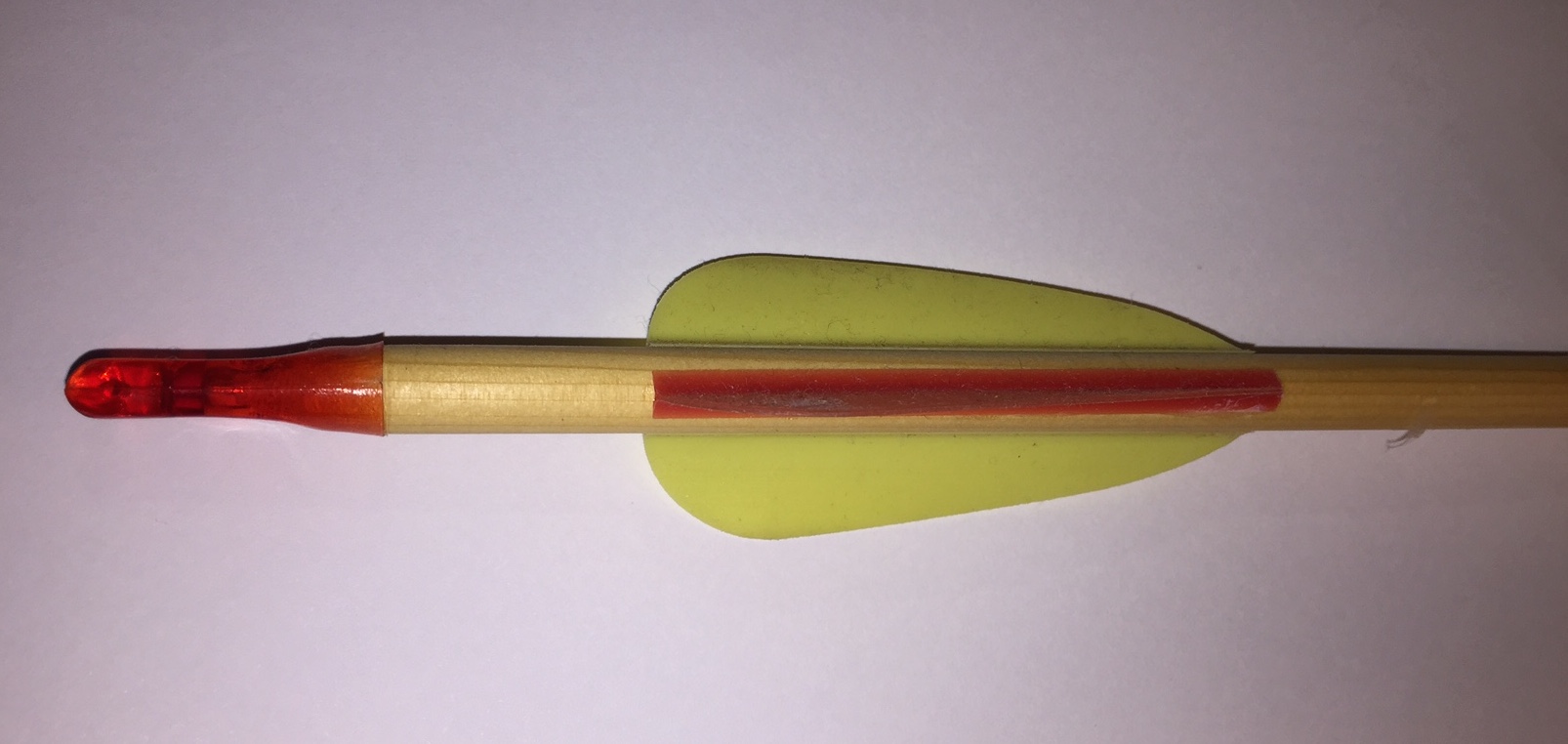
The concept is one of two arrows. The first arrow is the one that pierces our flesh and causes us pain. In a way, that is how it should be. Pain is a report to our brain that some damage has been done to the integrity of the organism and the nature of that report is often specific to the type of damage being done. A burn is experienced differently to a cut and a fracture differently to a muscle strain.
All organisations and teams have mechanisms for sensing pain when some damage has been done to the integrity of the organism. KPI’s, budgets, incident reporting, customer feedback and staff turnover are all reports on the state of the organism. While they can be sources of pleasure they are often sources of pain.
In the body, a report of pain to our brain is meant to prompt some form of response. As best it can, it draws our attention to site from which the pain originates so that we can take action to prevent further damage or applying measures to allow our body to begin to heal the damage – a bandage, a split or maybe a change in behaviour.
So too in the organisation, missed KPI’s, budget blowouts, complaints and high staff turnover are reports meant to prompt some form of response. They draw attention to the aspect of the organisation that is the source of that pain so that action can be taken to prevent further damage. Those actions most often result in organisational change – reductions in spending, safety time-outs, audits, changes in how performance is managed – changes that are intended to prevent further damage and allow the organisation to heal.
The pain of organisational change comes from the first arrow.
All suffering we experience as a result of that change comes from the second arrow. The second arrows are the one we inflict on ourselves and they are entirely of our own creation. The suffering is what we create when we start thinking about the pain, how intense it might get or how long it might last.
“That looks really bad, I don’t think we can survive another quarter with those sort of figures.”
We suffer when we decide we are going to fight the pain rather than see it for what it is.
“Implementing this new performance management system is a complete waste of my time. Didn’t work the last two times, isn’t going to help now.”
To reduce the suffering you experience from organisational change use the pain you are (rightly) feeling as a prompt to take positive action. Don’t ignore the pain – ignoring an arrow in your leg will not make it go away; don’t sit there and wait for someone else to do something about it – they are busy dealing with their own arrows! Take action to prevent further damage, action that starts the healing process.
That doesn’t mean the pain will magically disappear but it will go a long way to reducing your suffering.
***
If you would like me to come and share with you and your team the benefits that come from my work in the theatre and the experiential learning environments that I create, make me an offer via the Contact Me page.
If you enjoyed reading this or my other posts and you would like to read more, you can subscribe and receive them via email simply by putting your email address into the Email Subscription box just on the right of my blog home page. You will receive a confirmation email (which some systems will think is spam so keep an eye on your junk mail) that you need to acknowledge to complete the subscription process.
After you have subscribed, send this post on to your friends. Go on. You know at least one person who should read this post and three more who could use a bit of shaking up… seriously. Do it now. You read this far so pay it forward!
stake your claim and the growth will follow
August 21, 2015
For some reason I always though that the phrase “stake your claim” had a sense of declaring something that you have already achieved, a way of saying “Take note, this area is mine and this is what I have done.”
But the mineral prospecting origins of the phrase have much more of a, well, prospective sense to them. “This is my space and I think I will be successful working in it.” Sometimes what determined your success or otherwise was how hard you worked in the area you had claimed for yourself. Other times it didn’t matter how hard you worked you were never going to succeed because you had put your stake in the ground in the wrong place and nothing anyone could do was going to make it pay.
Driving down highway 1 in South Australia, through what is arguably some of the best wine country in the world, I saw something that made me think there might be some wisdom in the advice that tells you to do it. It had been dry so most of the paddocks were brown and dusty. One though caught my eye because it was criss-crossed with a grid of green dots – small areas where there was grass and it was green. At the center of each of those dots was a stake – nothing had been planted there other than the stake. A declaration, it seemed to me, that someone intended to grow something there.
And so something was. The simple act of planting the stakes had captured just a little more rain than the surrounding area creating a small circle of green growth in a sea of brown.
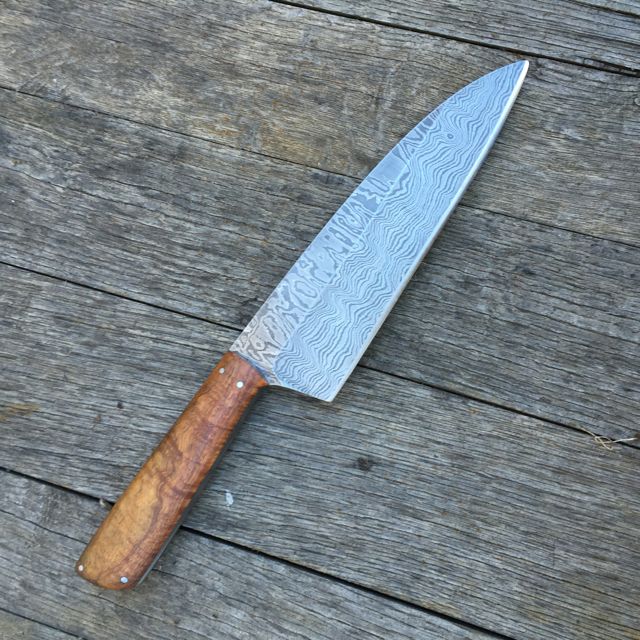
My damascus steel knife, Gardner Knives
I think that is what can happen when you are prepared to take action and you put a stake in the ground and declare that you intend to make something happen. I think of people like Andrew who recently self-published his second book in the Engibear series because he wanted kids to be able to read books about real engineers. Marcus, who established the well-known [bunker] and John Mills Himself and has a passion for high quality, ethically grown and roasted coffee. And Barry from Gardner Knives, the reason I was in South Australia, who has a passion for hand-made knives and shares that passion with anyone who has ears to listen to the steel.
I have had the privilege of spending time with all three of them. Each has been prepared to stake their claim and each have enjoying growing success that came, in large part I believe, simply because they were prepared to give it a go.
I am guessing you a have a stake lying around somewhere and an area in mind where you would like to plant it. So what are you waiting for? Stake your claim, until you do nothing can grow.
***
If you would like me to come and share with you and your team the benefits that come from my work in the theatre and the experiential learning environments that I create, make me an offer via the Contact Me page.
If you enjoyed reading this or my other posts and you would like to read more, you can subscribe and receive them via email simply by putting your email address into the Email Subscription box just on the right of my blog home page. You will receive a confirmation email (which some systems will think is spam so keep an eye on your junk mail) that you need to acknowledge to complete the subscription process.
After you have subscribed, send this post on to your friends. Go on. You know at least one person who should read this post and three more who could use a bit of shaking up… seriously. Do it now. You read this far so pay it forward!


 finding my own Way