is it time to sack your clients?
If you are in business I know you spend a lot of time trying to keep your current clients happy or looking for those new clients – but how long have you spent recently sacking clients?
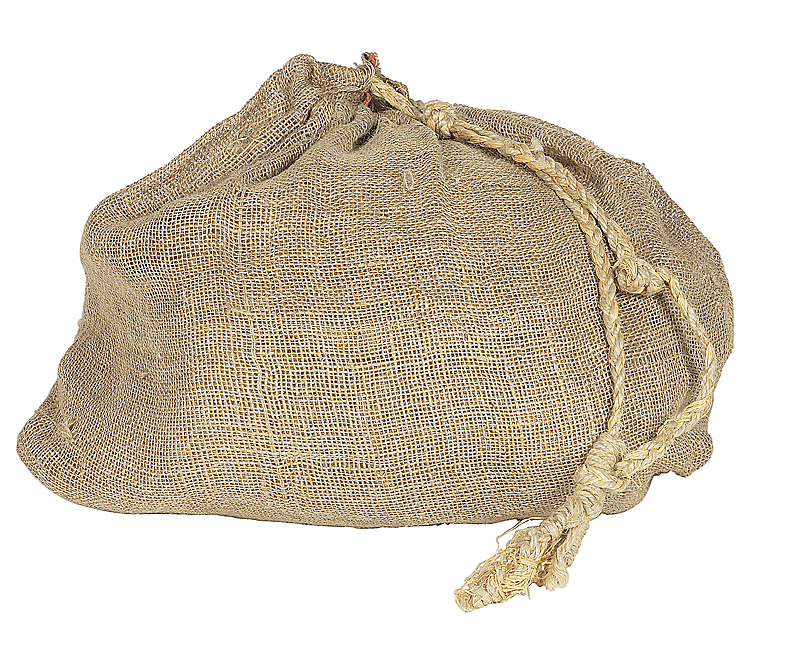
That’s right. How many clients have you sacked recently?
Last year I sacked my first client. Well, actually I suggested that they were asking for something that I wasn’t the best person to provide and that they might want to consider looking elsewhere.
They did.
It was difficult to do. It was a large organisation.
Lots of potential for future work.
Lots of potential for future grief. Future rework. Future stress.
I was talking to a friend who is a partner in a firm about the experience and he told me that it is an annual event for him. And that it is one of the best things he has ever done for his business.
He asks his employees to nominate the client they would most like to see go. They always choose the one that causes them the most angst – and it turns out, the one who costs the business the most money.
They are contacted and it is politely suggested that another firm will be better placed to meet their needs. Every effort is then made to make the transition to a new service provider as smooth as possible for the client.
The staff have removed a large source of stress from their work life. The business has removed one of the least profitable clients from their books. The client has been respected and has the opportunity to have their needs better met by someone else.
Win.Win. Win.
If you are not in business then your boss or other people within your organisation are your clients. I know someone who has just sacked their boss. He doesn’t have a new boss to go to but he recognised that the stress of working for his existing client just wasn’t worth it. A friend has moved to a different part of the same organisation. She has new clients as well. Both I suspect will be happier, more motivated and better able to serve their clients.
It isn’t necessarily easy to do and change of almost any kind brings its own challenges, but maybe it is time to take a look at your client list and identify one or two who would be better served by being on somebody else’ client list?
***
January was a weird month with the floods and all. What was nice though was the new subscribers who joined. So hello and welcome to David, Sarah, Craig, Jasmina, Beth, Jac, Goviina and Ida.
If you haven’t subscribed yet but enjoyed reading this or my other posts you can subscribe and receive them via email simply by putting your email address into the Email Subscription box just on the right of my blog home page. You will receive a confirmation email (which some systems will think is spam so keep an eye on your junk mail) that you need to acknowledge to complete the subscription process.
why do you do what you do?
Is there an activity which is difficult but you keep going back to in nonetheless because it’s juicy, deepening and strangely satisfying?
What do you read up about, find websites about, study for and ponder even though it is not your job?
Those two questions stopped me in my tracks. They are part of a set of questions in A Little Book on Finding Your Way: Zen and the Art of Doing Stuff by Rev. Francis Briers and they are there to help you ‘find your own Way’.
As I was reading A Little Book… with an eye to writing a blog post it shouldn’t have been a surprise to find myself thinking, “blogging answers those questions!” and as I read further it continued to tick all the boxes.

Bu-shi-do
Now when I first sat down to set up my blog I spent some time thinking about what I should call it. “finding my own Way” was what I came up with and the deliberate capitalisation pointed towards what I wanted the blog to become.
The “Way” was a nod towards the concept of Tao or Dao in China and Do in Japan. It is the Do of Aikido, Bushido and many other Dos. The Japanese character for Do translates literally as the way, the path or the street.
A Little Book… is all about helping you to find your path in life:
The Way is not about Bigger, Faster, Stronger, Taller or More. It is about someone expressing their essential nature. It is about blossoming into the fullness of your being – and not in an ‘I’m the most beautiful blossom ever’ kinda way – in a ‘finding out who you are and living that’ kinda way.
And while Rev. Briers is an Interfaith Minister, it is not about converting you to any religion or selling you T-shirts – it is about finding your unique path in the world.
Developing your own Way.
It is always nice to find someone who thinks about the same weird stuff you do, but what I really liked about the book was that it recognised from the start that our path is our own and that we can make anything our Way – cake baking, pottery, dog walking, making tea … even accountancy!
There is not space here to share all of the bits I have marked in my copy (you will have to get your own!) but to give you an idea, A Little Book … offers three principles for developing what you do into something that becomes your do or Way:
- A Philosophy
- A Form
- A Practice
And while that sounds initially daunting, A Little Book… is clear, easy to read and guides you gently through the process.
As far as my blogging goes I know I have a clear Form (a particular way that I go about it) and a regular Practice (a commitment to publish something once a week which requires me to sit down and write 3 or 4 times a week – there are a lot of draft posts you probably will never see!) but what I am finding most challenging is getting clear on my Philosophy.
A little book… offers this insight:
The philosophy of practice is what shapes the form of the practice and defines what it is you are trying to refine in yourself by doing the practice. It’s the answer to the question “Why are you doing what you’re doing?”
It is a question I get asked a lot when I tell people I blog. “Why do you do it?” Well, there are apparently a lot of good business reasons to blog but that is not why I do it. What I do know is that I find it difficult but strangely satisfying and I think about it a lot even though it is not my job.
But what is it I am trying to refine in myself by doing it?
I don’t have a full answer yet but it got me thinking… I know someone who I think is starting out on the Way of the Cake and I know someone who I think is well down the path of the Way of the Accountant. Both of them light up when you talk to them about their particular Way – another sign according to A Little Book on Finding Your Way!
I wonder if they know why they are doing what they do, what their Philosophy is?
Do you?
Do you know why you are doing what you are doing? Whether you do or you don’t, I’d love you to share your thoughts in the comments section below.
****
A Little Book on Finding Your Way: Zen and the Art of Doing Stuff is self published by Rev. Francis Briers under the Warriors of Love Publishing imprint and is currently only available via his website: www.fudoshin.org.uk (although it should be on Amazon soon so if you are reading this post after Feb 2011 check out my Books I Recommend Page for a link to where you can buy it through Amazon.com)
If you enjoyed reading this or my other posts you can subscribe and receive them via email simply by putting your email address into the Email Subscription box just on the right of my blog home page. You will receive a confirmation email (which some systems will think is spam so keep an eye on your junk mail) that you need to acknowledge to complete the subscription process.
I will never know what you know. Not now. Not ever.
Reality is subjective.
Anyone who lives in Queensland knows that now but I suspect that until the floods came we had forgotten.
My family were (thankfully) directly unaffected by the rising waters. Yet only five minutes drive from where I sit and write there are people who are now without a home.
I will never know what they now know. Not now. Not ever.
What it is like to watch the waters advance on you. To watch it creep through under the fence or around the wall next to the driveway. Watch it climb up the stairs and watch it enter your home through doors and windows. Or worse, to watch it take someone. Knowing there is nothing you can do.
Not now. Not ever.
Reality is subjective. Anyone who lives should know that and it shouldn’t take flood waters to remind us.
I will never see what you see. I will never hear what you hear.
Surely we see that red sports car upended in the mud by the river bank! Not if I am colour blind.
Surely we hear the sound of the rain falling on the roof? Not if I am deaf.
If I am blind I can never see what you see – but you will never hear or smell the things that I do. The way the sound ricochets off the walls as it moves down a hallway. The way the flavour of the room changes as people come and go.
You who love the taste of smoked fish will never know how it is to a mouth who refused to let it pass as a child.
“No. I will not. Not now, not ever!”
So why do we pretend that we do know? Why do we say, “I know just how you feel. It’s terrible isn’t it …”
The only honest answer can be, “You have no idea …”
Not now. Not ever.
***
If you enjoyed reading this or my other posts you can subscribe and receive them via email simply by putting your email address into the Email Subscription box just on the right of my blog home page. You will receive a confirmation email (which some systems will think is spam so keep an eye on your junk mail) that you need to acknowledge to complete the subscription process.
rising water, rising anarchy?
I once heard an apparent expert say that as a society we are only a day or two away from anarchy. His view was that should any of the large cities in the developed world lose the ability to distribute water to the people who live in it, that it would only be a matter of days before people started to become violent in their search for water and that we delude ourselves in thinking we are in control.
You might think he is a little on the extreme side. You might think that violence on the streets is something you will only see in “third-world” countries. You might think that we in the “first-world” are “better than that”.
I would like to think we are. But then you see images like this…
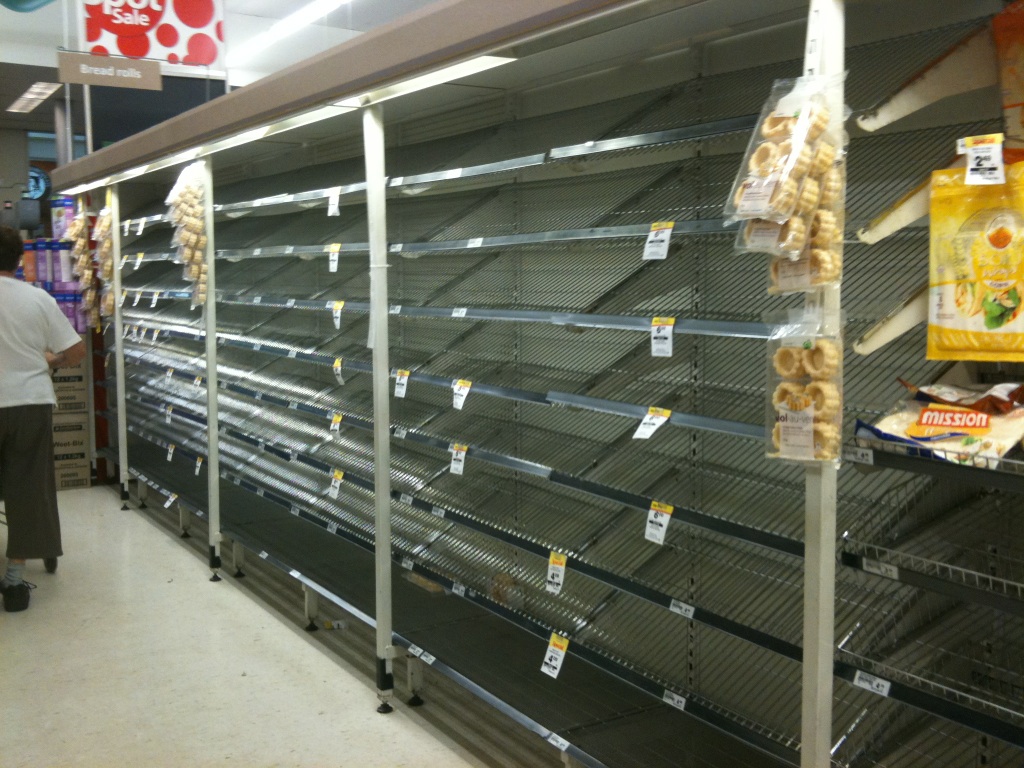
Bare shelves at the supermarket - it is only day 1!
It hasn’t even been 12 hours since people in south-east Queensland saw the images of the flash flooding, heard the Premier say that until it stops raining we cannot predict how much higher than the 1974 floods the water will go … and already the shelves have been emptied at supermarkets across Brisbane.
It is Tuesday as I write. Right now the peak in the Brisbane River is predicted to occur on Thursday – if it stops raining. If it doesn’t then what?
I think the expert was right. We are deluded. Perhaps ironically it is an excess of water rather than a shortage that may prove his point. We are not in control of the world we live in. Never have been. The sooner we come to realise we are just one small part of this magical planet we inhabit rather than the masters of the universe, the sooner we will start living well, and making wise decisions.
***
The devastating impact the current floods have had on people throughout south-east Queensland is heartbreaking. Where ever you are in the world, I hope that everyone you know is safe and stays safe and well.
***
If you enjoyed reading this or my other posts you can subscribe and receive them via email simply by putting your email address into the Email Subscription box just on the right of my blog home page. You will receive a confirmation email (which some systems will think is spam so keep an eye on your junk mail) that you need to acknowledge to complete the subscription process.
have you got the right tools?
In an earlier post I warned against letting the weeds get established in your life – those habits that you let go or just leave for another day before you start doing something about them. The take away message for me was “do your work now” – get down on your hands and knees and work on the roots.
Now without getting too personal, I should tell you I have a problem. With dandelions. Well, with a lot of weeds actually but the dandelions are threatening to take over the only piece of flat grass we have. Another summer unchecked and that would be the end of the grass – it would be dandelions as far as the eye can see.
Early last month I made a start at removing them after rain had softened the soil. Grabbing the dandelions and trying to pull them out didn’t work, I just ripped the leaves off. Taking my own advice to heart, I wanted to make sure I removed them roots and all. So I did what us humans do best, I used a tool to loosen the roots. That is it on the top of the photo below.
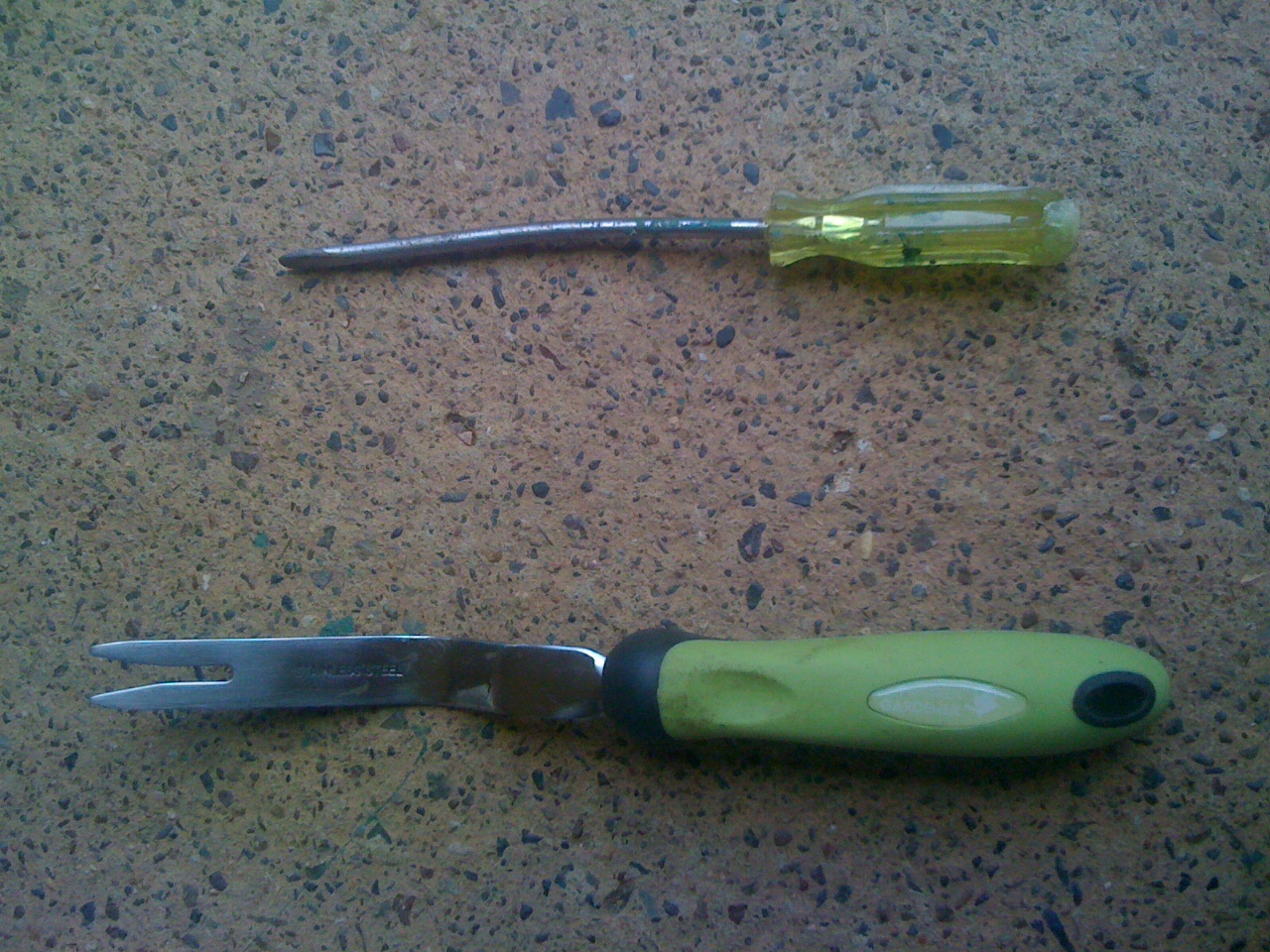
And it worked. Sort of.
It made my job easier. It was more effective than just grabbing them and pulling. I got more done. But it was still hard work and I lost motivation after a while.
Wanting to encourage my weeding activities, the boss provided me with a tool specifically designed to remove dandelions. It is the tool on the bottom of the photo above and it made all the difference.

The right tools are essential to get the best from your workforce
It was more effective and required less effort from me. It was easy to use! The result was that I got much more weeding done in a much shorter period … and I kept going.
I worked longer, was motivated and happy to do it. There was a certain satisfaction in seeing the fruits of my labour strewn across the driveway. I am not dreading the next time I have to deal with the dandelions. I am motivated to do more.
Do you have the right tools to do your work? Or are you struggling along with the wrong tool, getting the job done but doing it inefficiently?
If you are a leader in the workplace, do the people who are following you have the right tools to do the jobs you are asking them to do? Or are you building de-motivation into your workplace by providing them with tools that work – sort of?
Maybe you already know the right tools are essential to get the best from your workforce.
But have you considered that the right tools are essential to keeping your workforce?
Whatever your role in your organisation, take a look at the tools you have and ask yourself and those around you if they are the best ones for the job at hand. Remember, hardware, software, policies and procedures are all the tools of your business.
Are the tools you provide motivating the staff who use them to produce more … or is the only thing your tools are motivating your staff to do is refresh their CV?
***
If you enjoyed reading this or my other posts you can subscribe and receive them via email simply by putting your email address into the Email Subscription box just on the right of my blog home page. You will receive a confirmation email (which some systems will think is spam so keep an eye on your junk mail) that you need to acknowledge to complete the subscription process.
your key performance indicator
In a recent blog post Seth Godin asked the question what did you ship in 2010?. In Seth’s words “It didn’t matter whether it was a hit or not, it just matters that you shipped it. Shipping something that scares you … is the entire point.”
Seth shipped a lot in 2010 – book, courses, movements. And there was a lot he didn’t that he said scared him. The post prompted me to look back over 2010 and see how I went. I work for my own company so I get to do my own performance review! How did I go against my key performance indicators?
I was tough on myself – I could only include things on my list where I was able to point to real evidence that backed up the claim. Here is my list:
- I survived the GFC as a consultant/contractor and managed to grow the business. In fact I am entering into my fifth year running CDRS and I am proud of the fact that my clients keep using the services I offer
- I sacked my first client in 2010. That might not sound like “shipping” but it was something that scared me and it was the right thing to do – for both of us
- We asked for and received some high quality help with our book-keeping from Skilled Outsourcing and finally got some robust systems in place on the financial side of things
- I launched the Samurai Guy website early on and then in December got around to using 99designs.com to refine the visual brand
- I put my reframing Leadership corporate workshops out into the market (and that scared me)
- I returned to run the Samurai Game in schools program for Year 7 for the second year in a row and have been invited back in 2011
- I listened to someone’s criticism of my offerings and took it on board. As a result, in 2010 we laid the basis for an exciting new corporate offering for 2011 that we believe will create positive, real and lasting change in organisations
- I achieved a couple of my personal goals and made good progress on a couple more
They are all great things to have on my list but when I think about what I achieved in 2010 and what I have to show for it there is one thing that really stands out for me. I got some written feedback in the last week of December that for me lets me know that despite whatever else I may or may not have achieved or shipped last year, I reckon I did the most important job I have just right.
I know it is bragging but as far as performance reviews go, this is one I just had to share. I am not sure that if it was on my CV it would convince a corporation to engage me – but you know what? I think it should.
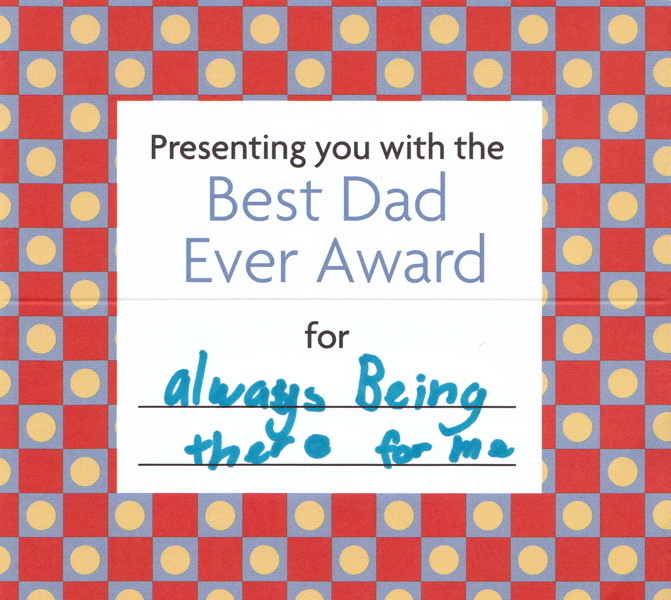
Whatever you shipped in 2010 and whatever you have planned for the year ahead, my wish for you is that you receive similar feedback for your key performance indicator.
finding ROOM. finding time.
 “In the world I notice persons are nearly always stressed and have no time. Even Grandma often says that, but she and Steppa don’t have jobs, so I don’t know how persons with jobs do the jobs and all the living as well.
In Room me and Ma had time for everything. I guess the time gets spread very thin like butter over all the world, the roads and houses and playgrounds and stores, so there’s only a little smear of time on each place, the everyone has to hurry on to the next bit.”
ROOM, p 286-287, Emma Donoghue
I spent the day after Christmas reading all 321 pages of a most remarkable novel. ROOM is a story told by Jack –a five year old who lives with his Ma in Room, which has a locked Door and Skylight and measures eleven feet by eleven feet. There is Bed and Dresser, Lamp and Bath, Sink and TV, Cupboard. That is the extent of Jack’s world. It is all that he knows. All that he has known. It is all he needs. He knows what is real and he knows that what he sees on TV is not real. Until the day Ma told him it is. Well bits of it…
Imagine that everything you thought was make-believe was actually real –the people, the places, the animals, the machines, all of it … and you now had to live your life in that world! What would that be like? How would it change how you lived now?
For someone like me who is obsessed with the idea of reframing, of looking at things from other perspectives, ROOM takes the concept and stretches it so far it almost will not fit inside your mind. ROOM is a novel so I know it is not real. Except you and I both know that there are people for whom it is. That is what makes it such a disturbing read.
Jack’s reflection on how we appear to consume time hung in the air long after I had finished reading. With 2010 all but complete and 2011 stretching out before us, it is during this week that many people start to think about what we spent the past year doing and how we would like to spend the coming year.
Spending time with Jack (or anybody else who perceives the world differently to us) helps to see the things that are right in front of our noses. Family. The wonder of a sunset. People who love us even if we haven’t seen them for many, many years. The majesty of a thunderstorm. The joy that comes from seeing blue sky after weeks of rain.
How thinly do you spread your time?
How do you do the jobs, but more importantly all the living as well?
What are you doing to help others to live well?
***
If you enjoyed reading this or my other posts you can subscribe and receive them via email simply by putting your email address into the Email Subscription box just on the right of my blog home page. You will receive a confirmation email (which some systems will think is spam so keep an eye on your junk mail) that you need to acknowledge to complete the subscription process.
how stupid can you be?
Sometimes our collective stupidity leaves me breathless.
During our recent holiday on the coast we thought that we would mark the end of the first day with some local seafood and a glass of white wine. A quick stop showed we were not the only ones with that thought – only one blue swimmer crab left – but that was all we wanted. Home we went and, as is the custom, I started to clean the crab. When I turned it over I saw something I had never seen before – the underside of a female sand crab. (For those of you who don’t know what I am talking about and what the difference might be I have included the image below.)
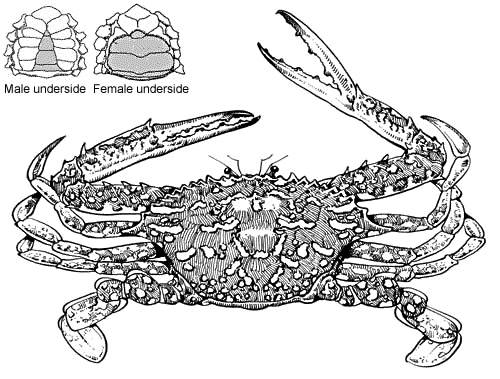
Blue Swimmer Crab (QLD DPI)
Being born and raised in Queensland by parents who love crabs of all sorts, I know that by law you can not take female crabs and that by logic you should not take female crabs.
But we were holidaying in New South Wales and a quick enquiry at a local bait and tackle shop revealed that over the border female crabs are fair game. Why was that the case I wondered aloud? The reason I was given was that apparently there were too many large female crabs and not enough mature males to mate with them. Think about that for a minute…
Too many large females (protected) + not enough large males (not protected) = a problem.
No argument there (although I suppose the nature of the problem depends on your perspective).
Solution proposed by New South Wales?
Eat the large females!
So following the logic we head towards …
Not enough large females + not enough large males = a very big problem.
Or am I the only one who can see that? In the newspaper this weekend was a piece on proposed fisheries closures. It opened with this:
Anglers fear moves to introduce licence fees and bans on fishing for snapper are based on dodgy science and scaremongering by green groups.
and then outlined the nature of the proposed closures:
Recreational fishers are up in arms over plans to ban the snapper catch along the Queensland coast between February 15 and March 31 next year.
All the usual prophesies of doom are then provided about how this will mean the end of all manner of businesses. Think about it though.
A six-week ban on just one fish species – snapper. Not a six-week ban on all fishing. Not even a ban on ever catching a snapper again. A brief targeted window of time to try to ensure the long-term sustainability of one small part of the ecosystem – for everybody. The fishing industry, you, me, our kids. Everybody.
Similar howls of complaint were heard when no-fish ‘green zones’ were established. People will go out of business!! The science is dodgy!!
The same article included this:
The CSIRO survey found there are now five times more legal-sized mud crabs in a green zone near the mouth of Logan River than outside it. And species seen more frequently in green zones include sweetlip, snapper and sharks and those observed more frequently outside zones are rock cod and tarwhine.
Five times more! On the basis of the information provided in the article that increase has occurred in under two years. In crude economic terms that is a return of >500% in just two years but the flow on effect of those increased populations will mean the return will be much much greater than that. (The CSIRO report indicated that the longer the green zone has been in place the more effective it is at protecting mud crabs as well as many fish species.)
How is it that people can believe that the answer to having not enough large male crabs is to allow the consumption of large female crabs? How is it that we can be so short-sighted to accept arguments for protecting the short-term incomes of people and corporations who operate unsustainable businesses? Why is it that the mantra of continuous economic growth goes on unquestioned?
How stupid can we be?
***
Sustainable fisheries seem to be topical at the moment. This recent program on Radio National’s The National Interest looks at both sides of the argument. The Australian Marine Conservation Society has released a sustainable seafood guide that aims to help consumers make more informed choices.
If you enjoyed reading this or my other posts you can subscribe and receive them via email simply by putting your email address into the Email Subscription box just on the right of my blog home page. You will receive a confirmation email (which some systems will think is spam so keep an eye on your junk mail) that you need to acknowledge to complete the subscription process.
we live on and between the folds
They say that art imitates life. For others there is no life without art.
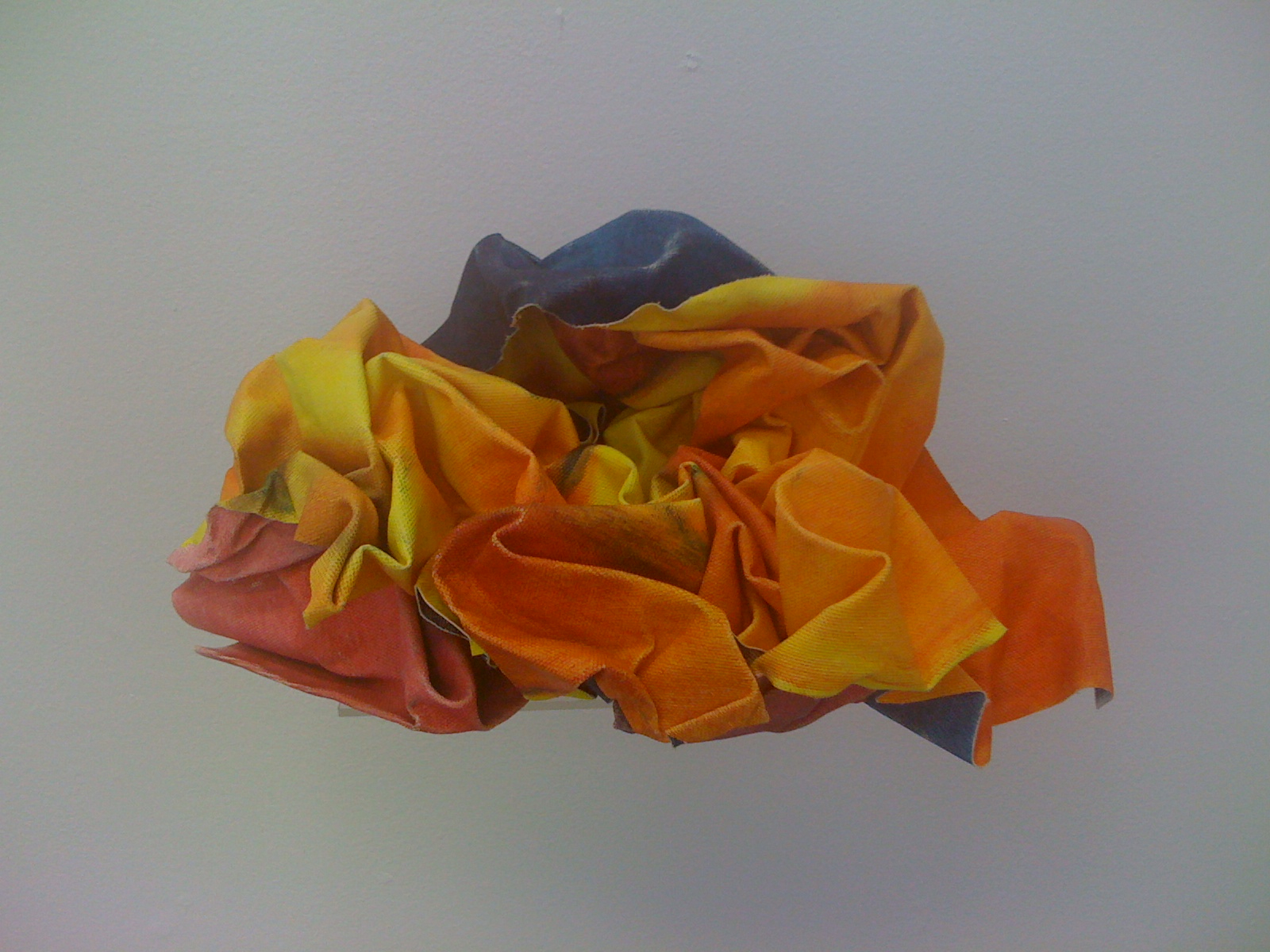
The photo below is of a piece from Brisbane artist Linda Phillips. It is a canvas, part of series that explores one part of the space where painting and sculpture become indistinguishable from each other. For me the work is at once both and neither and there is something ethereal about it. Linda says:
“Using the fold as my conceptual underpinning, I am exploring the site in-between interior and exterior which I see as permeable and fluid. During the process of folding I am also questioning what a painting is.”
"Even that morning she knew it was a mistake."
It resonates with me for two reasons.
The first is because the apparently simplicity of the piece belies its complexity and the careful thought that went into creating the work. You would be correct if you said it is a piece of canvas that has been painted and then folded, crumpled or scrunched. But if you stop there you are missing out.
If you choose not to engage any further with the artist you lose the opportunity to take a peek inside her mind. (And because you are looking at a photo that I took of a work I like, the opportunity to take a peek inside my mind as well!)
Why does he like her work? Why did she use those colours? It would be a very different object in white, black or red. Why did she do that – paint both sides of the canvas? Why develop (what I assume to be) the back of the canvas with that inky blue and then only show it at the back and that one little corner on the bottom right? Why fold it the way she did? What does she mean by “she knew it was a mistake”? What was she thinking?
I don’t know. I am not sure it matters though. I like that it makes me look at the things around me a little differently. It makes me wonder.
I do know that I made connections between Linda’s work and a documentary I saw a few months ago called “Between the folds”. It looked at the art and practice of paper-folding around the world. Traditional Japanese Origami, New York artists who construct dynamic, responsive pieces out of single pieces of paper and mathematicians who use paper-folding to stretch the boundaries of their work.
One of the artists in the documentary made the observation that once you have put a fold in a piece of paper you cannot remove it. You can try. You might be able to go a long way towards erasing it but it will always be there. The experience of a single fold has forever changed the way the paper looks and the way it will behave.
The more complicated Origami pieces rely on this. Early on the paper will be folded and then unfolded leaving only the crease. Other folds are placed in the paper and slowly the larger form will take shape. It may well be that the very last fold is the one that requires that earlier crease to allow the work to be completed.
I think life is like that.
Every experience we have leaves a crease in us. Like Linda’s work, our life is created by a process of folding. We live on and between the folds.
Sometimes we work very hard to try to erase the evidence. Other times we will proudly show the crease to anyone who will listen.
Sometimes the crease might be visible to all as a line on our face or a scar on our knee. Other times the scar will be invisible and we dare not show it even to those who might ask to see it.
Because we are all works in progress we do not always understand why life has chosen to fold us in a particular way. We can be doubled over by the pain and then left to heal ourselves the best we can.
It makes no sense.
Why does he like her? Why did she start hanging around with those people? It would be very different if they were white, black or red! Why did she do that – develop a relationship with both our business and our competitors and hide it from us so that it was only just visible? Why did he treat me that way? What did he mean when he said “it was a mistake to call you”? What was she thinking?
I don’t know.
I am sure it matters though.
The day will come when life will need that crease to be right where it is. You will need to draw on the strength it developed in you, apply the lesson you learnt or show the compassion to others that was shown to you. Life will try to fold you in a slightly different way that would not be possible if that crease was not there.
It may well be the fold that completes you.
***
Linda’s most recent article “The Light Fantastic” is available on page 11 of Issue #10, Summer 2010/2011 of the Queensland State Library Magazine . It previews artists Priscilla Bracks and Gavin Sade upcoming exhibition LUMIA: art/life/motion which explores contemporary life and thoughts about the future through an extraordinary collection of hand-crafted and interactive electronic creatures and installations. If you are interested in Linda’s work she can be contacted via email at: grill7(at)optusnet.net.au
If you enjoyed reading this or my other posts you can subscribe and receive them via email simply by putting your email address into the Email Subscription box just on the right of my blog home page. You will receive a confirmation email (which some systems will think is spam so keep an eye on your junk mail) that you need to acknowledge to complete the subscription process.
spring was supposed to be a time to sow!
Even though we have moved into the first days of summer, today feels a bit like the first days of spring. Cold, heavy rain has been falling for the last few days and after the last few years of drought nobody really knows what to do with all this water.
We expect spring to be a time of beginnings, often ‘new beginnings’. A time when we sow for the coming summer. We head off to the store to buy seeds and seedlings to plant in the expectation of reaping a summer harvest. We put away the winter blankets expecting warmer nights, we get the bike out of the shed in preparation for our spring exercise regime, pay a visit to the barber or hairdresser to trim the winter growth …
 But we forget that before we can sow we must reap the harvest from autumns and winters past. If like me you wake up one day to find spring has passed by, you also need to deal with the stuff that has established itself in the last few months. Our hair is not the only thing that has been growing unnoticed!
Before you can plant out your hopes for new growth in the spring you have to reap the harvest of your neglect and the winter weeds.
It strikes me that habits are a lot like that.
If you don’t deal properly with the habits you want to get rid of it is almost impossible to establish new ones in their place. It is no good just running a metaphorical lawn mower over the top of them. On the surface it might look like things have changed, that things are under control, but it only takes a week or two of a busy life to take your focus elsewhere and the old habits come back stronger than ever.
They say that ones year’s weeds gives seven years of seed. The message in that for me is “do your work now” – get down on your hands and knees and work on the roots. It’s hard work. It’s dirty work and there are times when the weeds seem to spring up faster than you can remove them.
There is no obvious reward for you at the end of each day but the rewards are obvious. Your labour will loosen the soil and turn it over so that it is ready to support whatever you might want to establish.
But some words of warning…
- Think carefully about what you want to grow. Only the weeds don’t need tending. If you plant the seeds of something new – be prepared to put in the work to nurture it until it is established
- Don’t wait until next year to do the work you know you need to do now. By then something else will have grown in its place. Besides, I don’t want to hear about your New Year’s resolutions and you know I will not be telling you mine!


 finding my own Way