sometimes the winner is the one who shows up
As opening words to a room of one hundred 15-year-old girls go, there are some words that are guaranteed to get their attention…
“Don’t you just love the feeling of putting your hand into the pocket of a jacket you haven’t worn in a while and finding money that you didn’t expect to find there? That happened to me this morning and it made me feel so great I want to give the $10 note I found to someone else.”
As follow-up words to a room of one hundred 15-year-old girls go, there ares some words that are guaranteed to arouse their suspicion…
Holding up the $10 note she added “Who would like to come up here and collect it from me?”
You don’t have to read minds to hear the conversations that were taking place inside their heads.
“What’s the catch? What is she going to ask me to do if I go up there? What if it is embarrassing? In front of all my friends – no way! I might just check the pockets of my jacket for the third time … and retie my shoe laces.”
We know our own minds well enough to know which of those conversations would run through our head if we were offered the chance of collecting $100 from a facilitator in front of a room full of our peers.
As the story was told to me there were only two girls in the room who took the chance.
Now I don’t have any research to back this up, but my sense is the statistics are about right for the wider population. There are one or two people in every hundred who are prepared to give it a go. They know there are risks and they take them into consideration.
Then they take action.
The rest of the crowd sits and says “That should have been me…”, “Well, she is not so great, I could have done that.”, “I am not brave like she is.” or “I didn’t want the $10 anyway.”
The two that stood up were still concerned there might be a catch but what was the worst that could happen?
As it turns out, there was no catch. No embarrassing tasks to perform. The two girls split the $10 and returned to their seats much richer for the experience.
All they had to do to collect their prize was to show up and sometimes that is all that it takes.
***
If you enjoyed reading this or my other posts you can subscribe and receive them via email simply by putting your email address into the Email Subscription box just on the right of my blog home page. You will receive a confirmation email (which some systems will think is spam so keep an eye on your junk mail) that you need to acknowledge to complete the subscription process.
After you have subscribed, send this post on to your friends. Go on. You know at least one person who should read this post… seriously. Do it now. You read this far so send it on! I promise they won’t judge you or think less of you if you do.
Brian had my number and I bet he has yours!
In difficult times inspiration can come from the most unexpected places.
I passed him on my street as I was driving home. I noticed him because not many people choose to sit in the sun on the crash barrier in the centre of the road. It was almost like he was waiting for me.
He knocked quietly, as inspiration often does, and called out a quick hello.
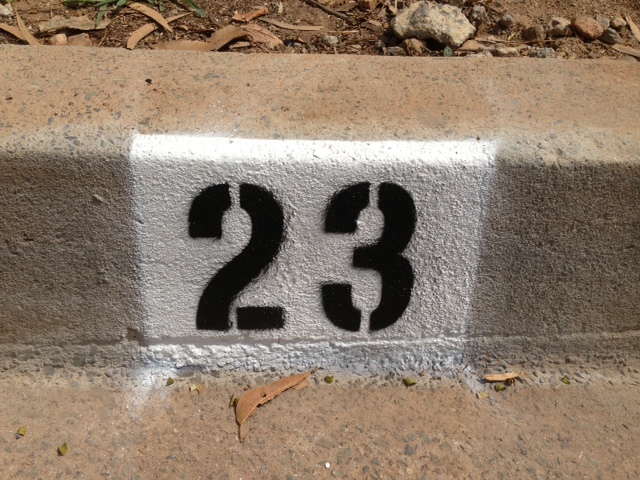 He was a local man, he said, who had lost his job a year or two back. He had seen a need in the community and was walking door to door offering to take care of it in return for the community doing a little to take care of him. House numbers painted on the curb he said. Always a problem for ambulances, taxis and friends to find the right house at night! Would I be interested in him taking care of that for me today?
The $20 he asked in return would help him to get by.
I went out to watch him do his work and Brian and I got to talking. The first months were the hardest he said. Nobody wants to hire a guy in his 60’s. So he hired himself and he was getting by. Was I interested in high pressure water cleaning? He was expanding his empire, he actually said “his empire”, and was adding a guy who used to do roofing to do some of the water blasting.
I shared a little of how I was experiencing the current economic environment and the challenging times that many people I know are facing. “The money is still out there,” he said, “you just need to get off your behind and go looking for it.”
I know Brian is right. He did a great job and I gladly gave him some of mine. Brian had my number and I bet he has yours. If he drops by your place one day, be sure to talk to him while he is working.
The inspiration is no extra charge.
***
If you enjoyed reading this or my other posts you can subscribe and receive them via email simply by putting your email address into the Email Subscription box just on the right of my blog home page. You will receive a confirmation email (which some systems will think is spam so keep an eye on your junk mail) that you need to acknowledge to complete the subscription process.
After you have subscribed, send this post on to your friends. Go on. You know at least one person who should read this post… seriously. Do it now. You read this far so send it on! I promise they won’t judge you or think less of you if you do.
it is always funny until somebody gets hurt … in context.
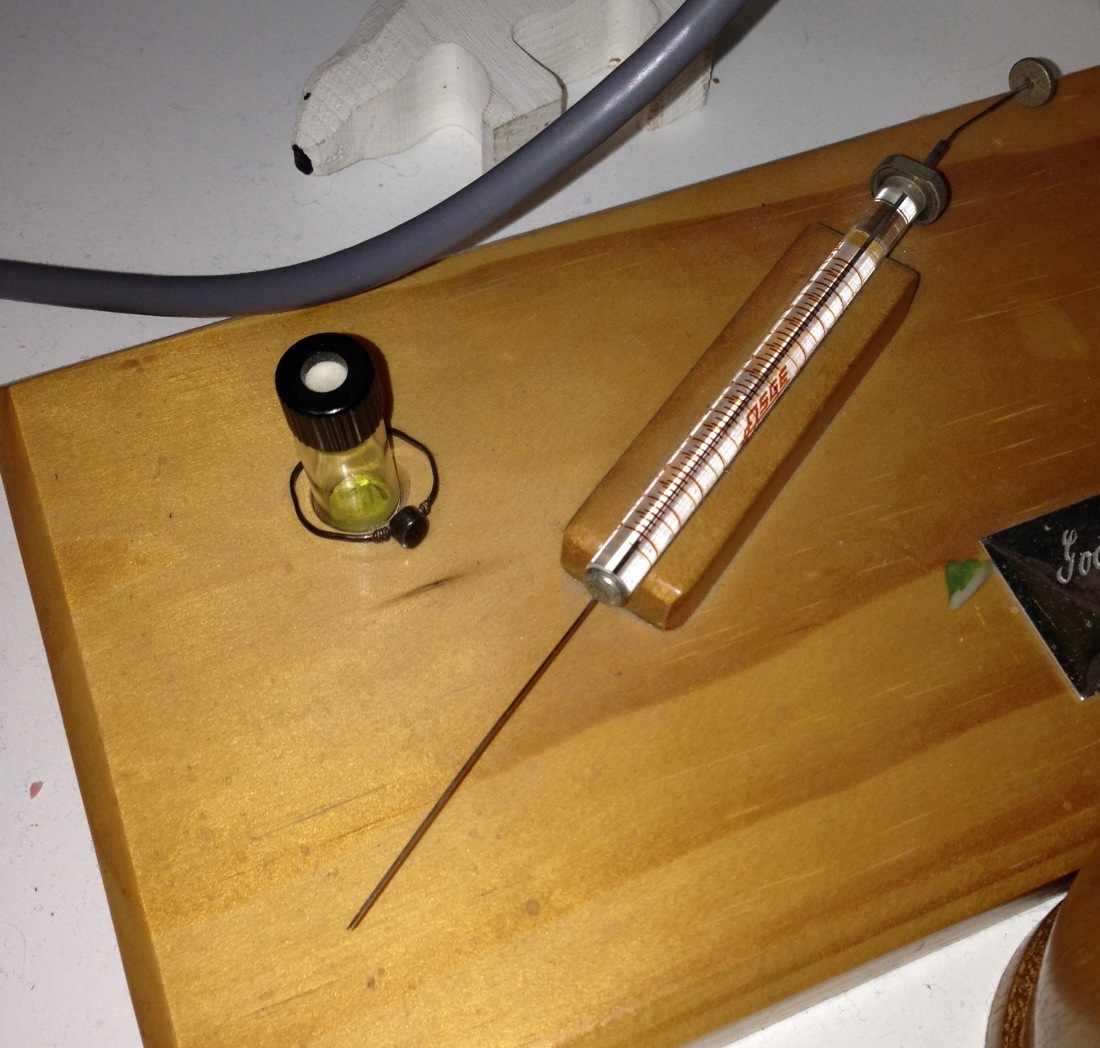 “Whenever I look at that it just makes me laugh!” was what she had just said. I know because I asked her to repeat it for me.
“Whenever I look at that it just makes me laugh.”
“That needle and syringe? That makes you laugh?”
“Every time. It has been on her desk beside her computer since she left the lab last year and it always makes me giggle.”
“A syringe mounted on a board so that the exposed needle a couple of inches long sits up off the surface? It looks bent to me, like somebody has caught themselves on it.”
“That is what makes it funny! That it is bent.”
To which I responded “I’m sorry, I must be missing something here…”
And I was.
It was the day after my last post on why the monkeys in your organisation don’t eat bananas and I had walked right into a wonderful example of how we can become blind to things because of the context we view those things from.
Because when I looked at the syringe I saw a workplace needle-stick injury waiting to happen. The slight bend in the needle suggested to me that it might have already claimed its first victim. This, in a part of the organisation that spends much of their time thinking about risks and how they can be avoided or mitigated – and it has been in plain sight for a long while.
Why hadn’t something been done about it?
Because when they looked at the syringe it made them giggle.
Both of them had worked in a lab in earlier parts of their careers and the sight of a bent gas chromatography needle was indeed something that aroused mirth. It represented a failure of sorts that required rework – a bit of a rookie error.
That was their context. That was what was in plain sight for them. A humorous and thoughtful farewell gift given to someone to help them remember from whence they have come.
My context was very different and it didn’t look funny to me. Because I don’t share their memories. I have not been a part of their histories.
Our histories determine how we do things around here. It is why the monkeys don’t eat bananas. It is why your organisation is successful. It will most likely be a big part of why it will fail.
When someone from outside tells you that they don’t think it is funny, that it doesn’t make sense or that you are missing opportunities that are sitting there in plain sight …
resist the urge to tell them it is funny, to explain why it does make sense or pull them away from the ladder.
Ask them why they see things the way they do. Listen for their context. What is it about their history that you can learn from and what is it about yours that you can share with them?
A good friend and colleague when told by people “you don’t understand, that is just the reality of the situation.” always responds with “Yes, but whose reality? Because you are not describing mine.”
Exactly.
***
If you enjoyed reading this or my other posts you can subscribe and receive them via email simply by putting your email address into the Email Subscription box just on the right of my blog home page. You will receive a confirmation email (which some systems will think is spam so keep an eye on your junk mail) that you need to acknowledge to complete the subscription process.
After you have subscribed, send this post on to your friends. Go on. You know at least one person who should read this post… seriously. Do it now. You read this far so send it on! I promise they won’t judge you or think less of you if you do.
why your monkeys don’t eat bananas
“How on earth did we end up doing it that way? It makes no sense.” she said. “Anytime I make suggestions about how we might change things, to improve them, I just get shut down. Why can’t they see there is a better way?”
My response to that question is to ask if I can tell a story about monkeys that don’t eat bananas. It is one of my favourite stories about resistance to organisational change.
In the story a group of monkeys are being kept in an enclosure by researchers. In the middle of the enclosure is a ladder and at the top of the ladder is a huge bunch of ripe bananas. Not a single monkey gives the bananas even a sideways glance as they go about their day. At meal times they eat bland monkey pellets while the bananas go untouched.
 A new monkey is introduced to the group (let’s call him Bob) and after he has been introduced around Bob starts to explore the enclosure. Bob (see photo) has been around for a while and has been in enclosures like this before. Seeing the bananas at the top of the ladder he makes his way over and starts to climb. Before Bob can get a foot on the second rung the entire group rushes towards him, drags him off the ladder, throwing him to the ground amidst much screeching and vocalizing.
Confused and sore, perhaps thinking the bananas are the property of a more senior monkey, Bob leaves them alone for a while but soon notices that nobody else seems to be able to even see that the bananas are there. So he tries again to climb the ladder with the result that the attack from the rest of the group is even more fierce than the first time. Alert to his desire to get to the bananas the rest of the group start issuing warnings if Bob should even start to glance towards the bananas at the top of the ladder.
In time Bob learns to go about his day without even giving a sideways glance to the bananas at the top of the ladder. No explanation is offered and it makes no sense to him but the message is clear – We don’t eat those bananas! A few months later when another new monkey is introduced, Bob finds himself being one of the first to drop his pellets, screech and drag her off the ladder.
It was a relatively easy process for the researchers to generate this sort of behaviour. In the beginning a group of monkeys, now long gone, were introduced into the enclosure. Things were good and they ate bananas to their hearts’ content.
Then something changed.
When any of the monkeys attempted to climb the ladder the researchers saturated the entire enclosure with ice-cold water. The monkeys tried everything they could think of but each time anyone touched the ladder the outcome was the same. They soon learned not to approach the ladder and life returned to a slightly blander form of normal.
Then one of the original monkeys was replaced. Like our guy Bob, she soon saw the bananas and approached the ladder resulting in a frigid drenching for the entire group. The next time she tried the group took action to prevent her from climbing towards the bananas because they understood what the consequences would be. It took a few reprimands from the group but she soon got the message.
Then another monkey was replaced. This time no water was needed. The group made sure he didn’t climb the ladder.
After a time another monkey was replaced, then another and another until years later none of the original group remained. None of the monkeys in the enclosure had ever experienced the icy soaking but there was no way they were even going to look at that ladder for fear of how the rest of the group would respond. That is why your monkeys don’t eat bananas.
And that is where Bob entered our story.
And until recently that is where I would have ended it. The parallels with the experiences of many who find themselves in corporate enclosures are obvious and rarely need further explanation.
It is a tale told of how things came to be. How things are. It says nothing directly about what might come to be and it doesn’t offer any hope to Bob or those who might enter the enclosure after him.
It is time for that to change. It is time to give the story a new ending.
I’d love to hear your thoughts. Leave a comment below and tell me your answer to the question “How do you teach your monkeys to eat bananas again?”
***
If you enjoyed reading this or my other posts you can subscribe and receive them via email simply by putting your email address into the Email Subscription box just on the right of my blog home page. You will receive a confirmation email (which some systems will think is spam so keep an eye on your junk mail) that you need to acknowledge to complete the subscription process.
After you have subscribed, send this post on to your friends. Go on. You know at least one person who should read this post… seriously. Do it now. You read this far so send it on! I promise they won’t judge you or think less of you if you do.
you want to know what I really think of you?
“You want to know what I really think of you?”
 They are usually words that we hear spoken in threatening tones. We expect that they will be followed up with more words that will express negative opinions of us, our competency, our personality, our style, how we dress or how we smell.
They are not words we usually want to hear. They are not words that we usually want to people to say to us. Because we are afraid of the words that might follow.
Afraid of the opinions that others might share of what they don’t like about how we show up in their world.
I’ve been doing a lot of thinking lately about how I show up for people. A friend had mentioned me to someone in a professional context and their response was surprising and disappointing.
So, I started asking people.
“So, what do you think of me? What do you like about working with me? What am I good at? What would you tell other people that I do well?”
It was nice that people didn’t seem to struggle to come up with answers. What I learned though, was that what they were saying they would tell others I did well wasn’t the kinds of things I wanted to be known for doing well. It only took a couple of conversation like that before I came to the realisation that I was avoiding asking the most important questions…
“So, what am I bad at? What don’t you like about how I show up at work?”
So I asked.
“Well, sometimes you piss senior people off… But that’s not really the problem. The problem is that you piss ’em off and you don’t know that you are doing it.”
“You can tend to be a bit arrogant. You come across sometimes like you have all the answers.”
Ouch. And thank you for telling me what I needed to hear most. Now that I know I can choose to take action (or not) in response to those perceptions of me.
Since then I have had conversations with people who I know (and so have my own experience and opinion of how they show up in my world) and I have been listening for how they think they show up in the world. How they think people experience them and how people experience their leadership. Many haven’t given it much thought and few have asked others directly. All of us have a view on how others show up for us.
As an example, I was having coffee with recently with the person who started me down this road. When I asked him how he thought people experienced his leadership he replied “That’s a very good question. I hadn’t really thought about it. I hope they would say …” When speaking of a mutual friend however he was quick to offer “I am glad to see he has settled down a bit and become, well, more professional. He used to show up a bit like an excited teenager.”
Ouch. And I suspect that he hadn’t shared that opinion with the person who needed to hear it most. Without it, there is no opportunity for them to take action (or not) in response.
At least that is what I think.
Should we tell people what we really think of them? Are we able to share with them how they show up in our world? Are they able to hear what we have to say? To listen for the almost certain value to be generated from our (possibly) negative assessment of them?
Are you able to ask the question and have people respond..
“You want to know what I really think of you?”
Or is it all too hard? Too dangerous? For us and for them?
Go on. Tell me. I want to know what you think. Really.
***
If you enjoyed reading this or my other posts you can subscribe and receive them via email simply by putting your email address into the Email Subscription box just on the right of my blog home page. You will receive a confirmation email (which some systems will think is spam so keep an eye on your junk mail) that you need to acknowledge to complete the subscription process.
After you have subscribed, send this post on to your friends. Go on. You know at least one person who should read this post… seriously. Do it now. You read this far so send it on! I promise they won’t judge you or think less of you if you do.
Imagine having to dial triple-o…
At a recent rehearsal I walked past two of the younger members of the cast who were playing with one of the props – an old fashioned circular dial phone. They were doing what all of us do when we see one. Putting their fingers into the hole and rotating the dial and then enjoying the satisfying click-click-click-click as the dial returned to the starting position.
“Imagine having to call triple-o! That would take forever to dial...”
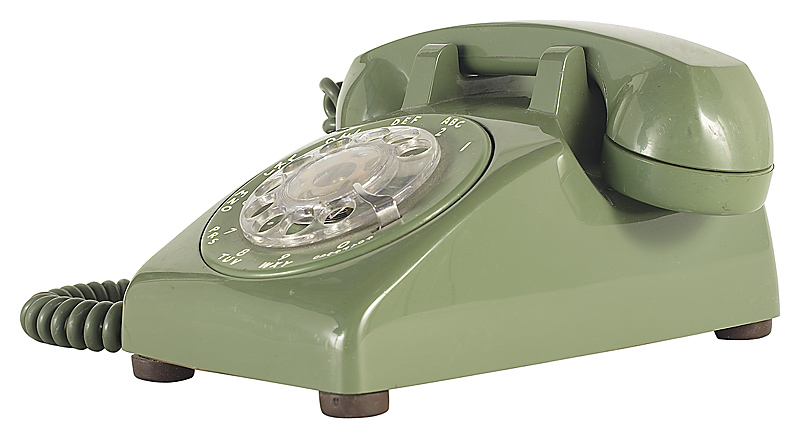 Now my recollection is that is exactly the reason why triple zero was chosen. It was a combination of numbers that you had to dial very deliberately to be connected to emergency services. It reduces the number of accidental dialings.
You had to mean to do it.
It was pretty hard to accidentally butt dial triple zero! Your two year old was unlikely to call an ambulance while playing with the phone – mostly because the one telephone in the house was up on a table somewhere out of reach, but also because of the difficulty in dialing three zeros should they succeed in using the cord (yes the cord) to pull the telephone down onto the floor.
Triple zero made sense at the time but my young colleagues aren’t to know that. The only place they come across those sorts of telephonic devices is as props in the theatre or the occasional antique store.
Maybe it is just my age but I am increasingly witnessing the same sorts of conversations in the organisations I work with. Only it has very little to do with the age of the people having the conversation and more to do with how long they have been involved with the organisation.
There is often a very good reason why things are the way they are. Like my young colleagues, those with a shorter history bring with them a different context through which they view the procedures and practices of the organisation. Sometimes, many times, that creates opportunities for improvement. But not always and I have seen many examples when an ignorance of the history behind why it is done that way creates problems today.
With the increasing trend towards the use of temporary and contract staff (along with secondments and expats) large parts of today’s organisation has a corporate memory of only three or four years. They are quick to decide we don’t need this or that role – why would you do it that way in the first place? It is not until the organisational equivalent of butt-dialing triple zero that they come to see there is a very good reason why it was done that way.
I think it goes the other way as well. Very few people believe they will stay in the organisation more than a couple of years so they don’t spend much time thinking very far into the future. It is the organisational equivalent of the short term government policy decisions that arise out of the three or four year electoral cycle, and the results are just as damaging.
***
If you enjoyed reading this or my other posts you can subscribe and receive them via email simply by putting your email address into the Email Subscription box just on the right of my blog home page. You will receive a confirmation email (which some systems will think is spam so keep an eye on your junk mail) that you need to acknowledge to complete the subscription process.
After you have subscribed, send this post on to your friends. Go on. You know at least one person who should read this post… seriously. Do it now. You read this far so send it on.
Baristatude!
It is a happy day when many of the parts of my life that I love come together in a single moment.
Sitting with my family at our favourite local coffee shop on a cool and sunny Sunday morning brings together two of them. The staff there know me well enough to tell me what the single origin is that they have on their second grinder without me having to ask. Even when things are crazy – and it does get crazy there – they always have time for a smile.
I notice it because I have had many experiences in one particular coffee shop where the staff who bring the coffee to our table deliver it with a sullen face and barely a grunt. If it wasn’t for the quality of the coffee they serve AND the fact that we are currently working with a client across the road from their store, I wouldn’t bother going back. Ever.
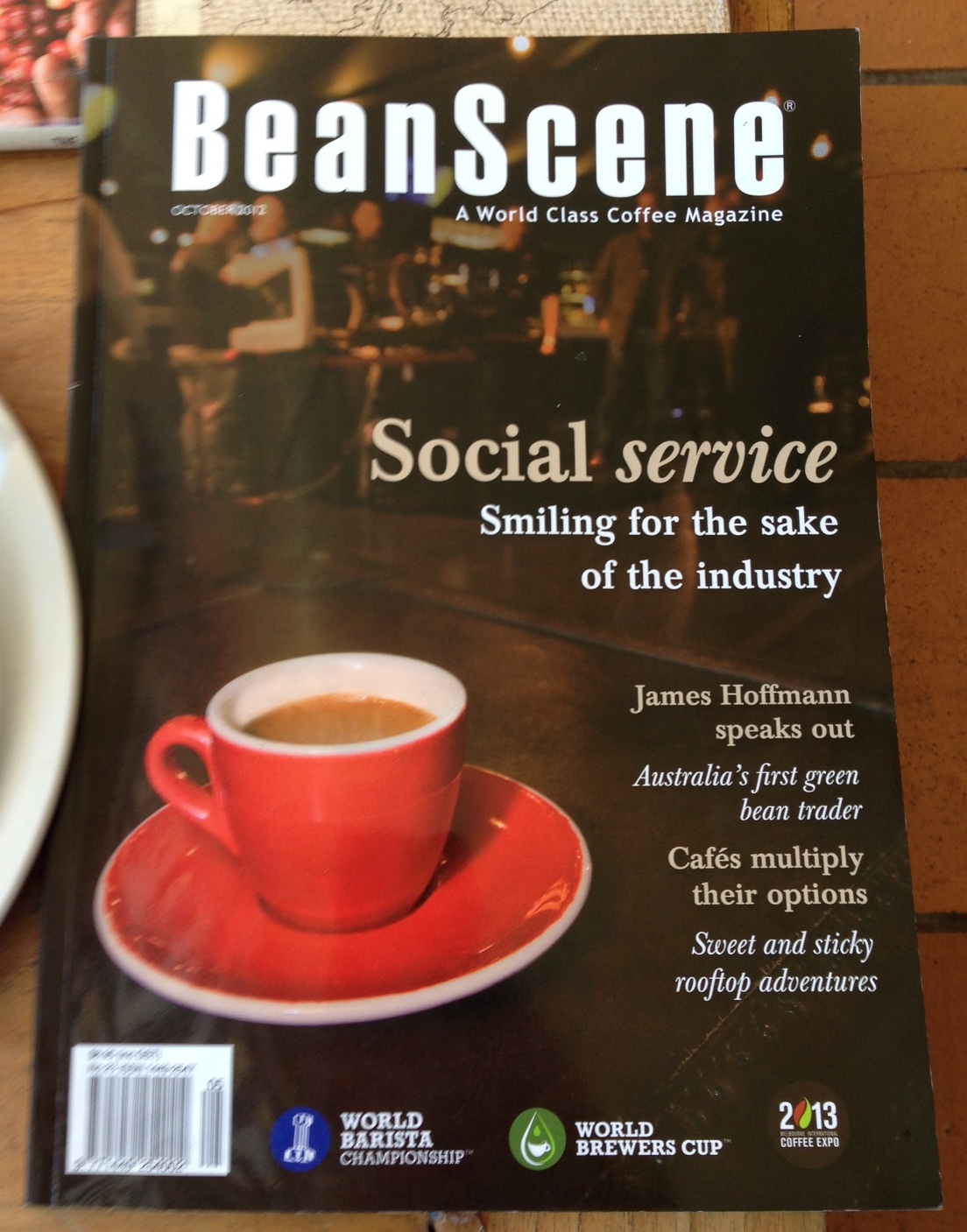
Which explains why the cover of the BeanScene magazine on the table caught my eye. The article “Social service – Smiling for the sake of the industry” was penned by two-time Australia Barista Champion and 2006 World Latte Art Champion Scottie Callaghan. He calls this type of disdainful behaviour baristatude.
Scottie’s identification of this emerging trend and his subsequent advice is of value to everyone not just those in the coffee business – remember that it is your customer who is paying your wages!
The order of a half-strength caramel soy latte is not something to turn your nose up at just because you believe that the blend that you have spent months crafting (perfecting the extraction by adjusting both the temperature and pressure of the extraction on your very expensive, state of the art, retro espresso machine) would be not spoiled but soiled by the addition of caramel syrup.
It is what the customer wants and it shouldn’t be news to you that customers are only prepared to pay for something that they want!
Too often I come across people who have forgotten that they have customers (internal as well as external) and haven’t bothered to think about (or even ask) what it is that their customer is looking for. In the case of the barista, taking 25 minutes to produce a cup of coffee (however perfect it might be) does not take care of my concerns as a customer – unless I have specifically said I am prepared to wait for the cold, drip filter process to complete.
Over-servicing is just as bad as under-servicing and results from failing to take care of your customer’s concerns. If you serve up the best half strength, caramel, soy latte on the house blend that he has ever tasted then you can be sure he will come back and he will bring his friends.
Whatever you do, just don’t get it confused with my piccolo on the Colombian “Santaurio” Geisha vareital roasted by my favourite roaster!
And please, make sure it arrives with a smile.
***
If you enjoyed reading this or my other posts you can subscribe and receive them via email simply by putting your email address into the Email Subscription box just on the right of my blog home page. You will receive a confirmation email (which some systems will think is spam so keep an eye on your junk mail) that you need to acknowledge to complete the subscription process.
After you have subscribed, send this post on to your friends. Go on. You know at least one person who should read this post… seriously. Do it now. You read this far so send it on.
Surrounded by people you love…
“We have created a business we love based on a certain ethos and it attracts people we love with a similar ethos. It is great to travel through life surrounded by people you love and who inspire you to be a better person.”
Sometimes somebody else writes the blog post you have always planned on writing about the people who inspire you. This is one of them.
Read it and then go find Marcus at Bunker and buy a coffee off him.
http://www.theurbanlist.com/brisbane/a-list/close-encounter-marcus-allison-bunker
By Kim Barnard on theurbanlist.com
***
If you enjoyed reading this or my other posts you can subscribe and receive them via email simply by putting your email address into the Email Subscription box just on the right of my blog home page. You will receive a confirmation email (which some systems will think is spam so keep an eye on your junk mail) that you need to acknowledge to complete the subscription process.
After you have subscribed, send this post on to your friends. Go on. You know at least one person who should read this post… seriously. Do it now. You read this far so send it on.
Antiques made daily
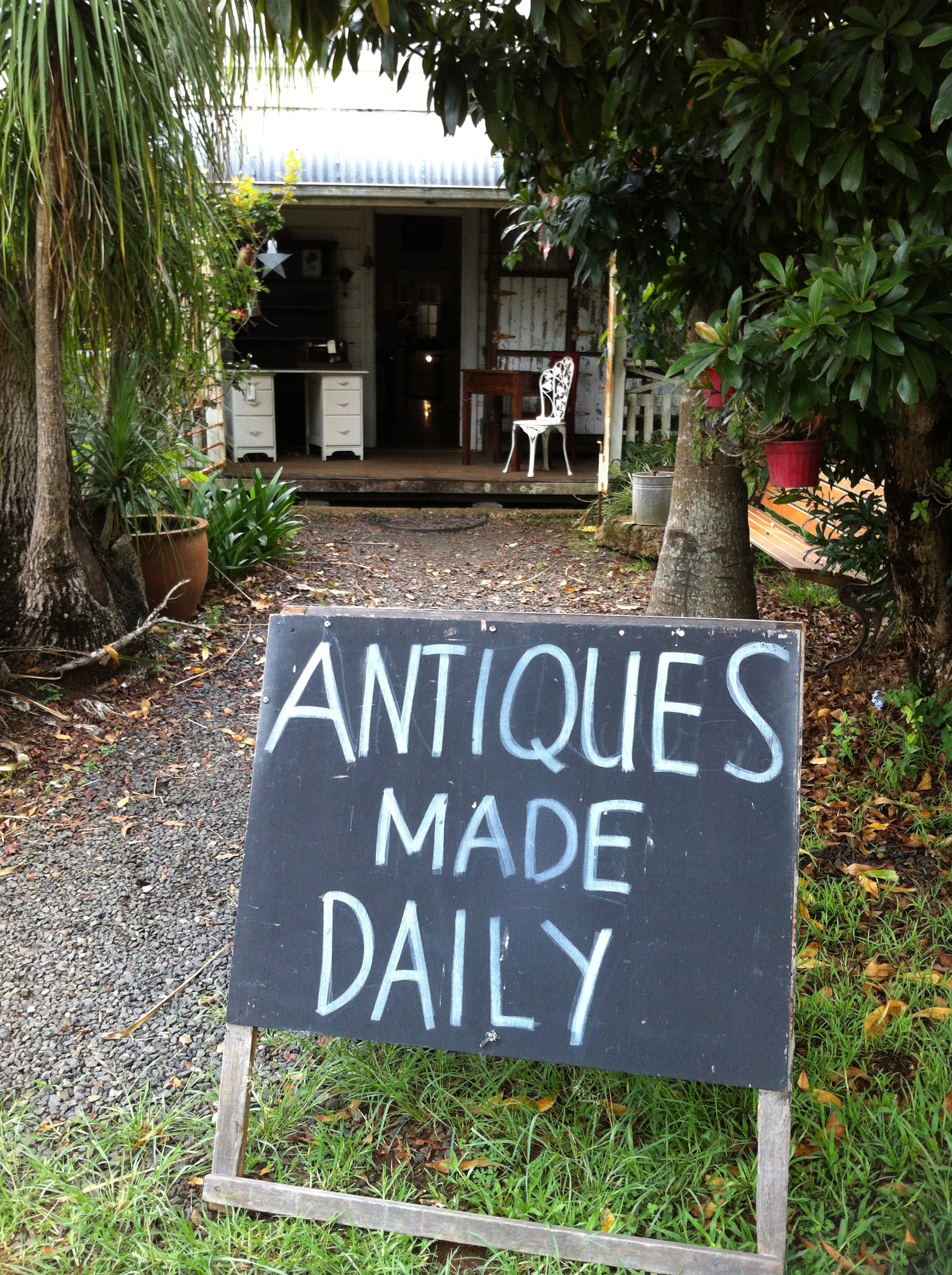
At first glance that seems like an odd sign to put out the front of a small antique store.
You don’t go there looking for anything made today, or last week or even last year.
You go there looking for something that has stood the test of time, something that was built to last…
and did.
You may expect to pay a premium price but not for an ‘antique’ that was made today. That is not what we want!
Except I do.
I want an antique that was made today. Something that was built to last. Something that will stand the test of time. It annoys me that very little is made to last these days. Very few businesses set out to do that.
For that matter, very few businesses seem to set out to last.
I don’t want to be a part of that.
I am tired of throwing away little pieces of my life when last year’s fan stops turning or this year’s software version will not run on that hardware. And it is a piece of our life that we throw away. You (or someone you love) spent their time “at work” to earn the money to pay for it. They exchanged a precious few hours of their life for the cash needed to buy it. They were precious few hours they did not get to spend with you or you with them. So when you throw that thing away a little part of your lives gets thrown away with it.
I don’t want to be a part of that.
Sometimes that means spending extra time on something to make sure that it will last, so that it will one day be an antique. That’s ok with me. It think that is time (and life) well spent. And if it just happens to be a relationship that you are building to last then all the better. Without relationships we are nothing.
So if you come by my place sometime don’t be surprised when you see a sign above my desk that lets you know exactly what I am trying to do. The sign says…
Antiques made daily.
***
If you enjoyed reading this or my other posts you can subscribe and receive them via email simply by putting your email address into the Email Subscription box just on the right of my blog home page. You will receive a confirmation email (which some systems will think is spam so keep an eye on your junk mail) that you need to acknowledge to complete the subscription process.
After you have subscribed, send this post on to your friends. Go on. You know at least one person who should read this post… seriously. Do it now. You read this far so send it on.


 finding my own Way